
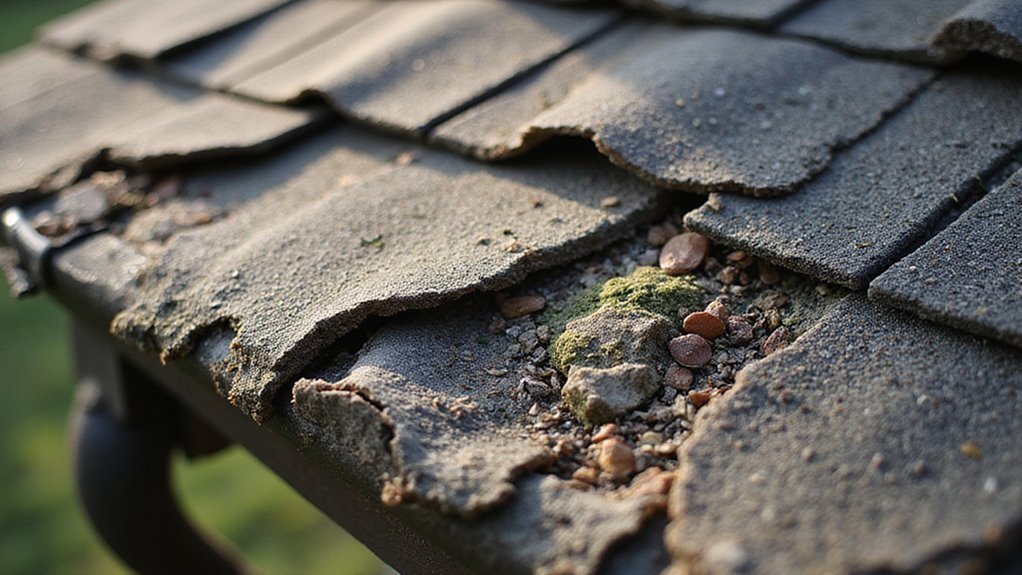
Your roof shields your home from weather damage, but it won’t last forever. Over time, shingles deteriorate, leaks develop, and structural problems emerge. Recognizing the warning signs early can save you thousands in repairs. From missing shingles to rising energy bills, several indicators suggest your roof needs replacement. Understanding these signals helps you protect your home’s integrity before catastrophic failure occurs.
Missing or Cracked Shingles
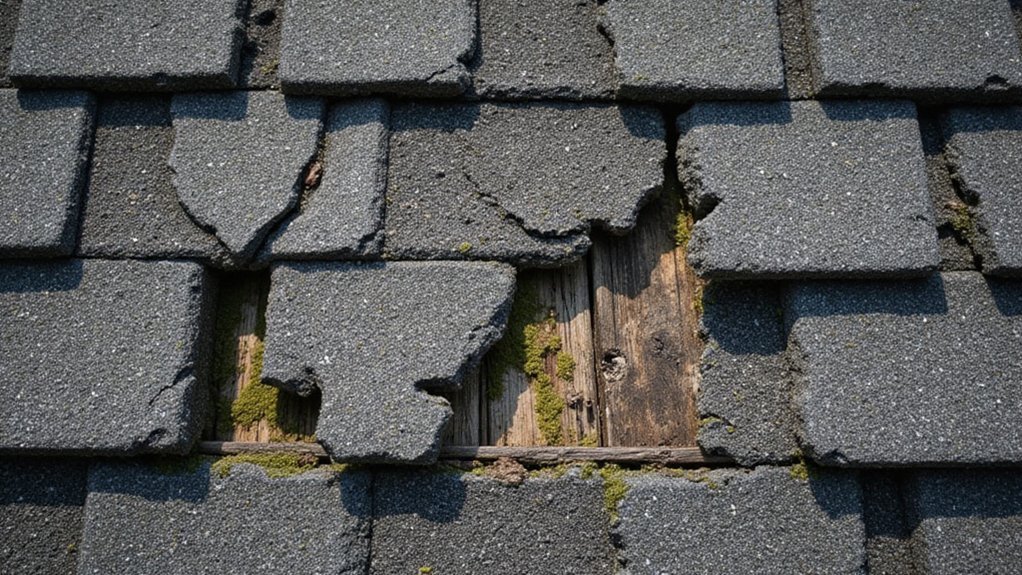
Because your roof’s shingles are its first line of defense against weather damage, you’ll want to inspect them regularly for signs of wear and deterioration. Missing shingles leave your roof’s underlying layers exposed to moisture, wind, and debris, which can cause significant structural damage over time. Cracked shingles also compromise your roof’s protective barrier, allowing water to seep beneath the surface and create leaks inside your home. You should examine your roof seasonally, paying close attention to areas where shingles appear discolored, curled, or separated from the roof deck. If you notice multiple missing or cracked shingles scattered across your roof, you’ll likely need a full roof replacement. However, isolated damage in small areas may only require patching or shingle replacement rather than complete roof installation.
Water Stains and Ceiling Leaks
While missing and cracked shingles allow water to penetrate your roof’s protective layers, the damage they cause often becomes visible inside your home through water stains and ceiling leaks. You’ll notice brown or yellowish discoloration on your ceilings and walls, which indicates water’s been seeping through for some time. These stains typically appear in corners, along edges, or beneath attic spaces where water collects and drips downward. Ceiling leaks represent a more advanced problem, as water’s actively dripping into your living spaces. You shouldn’t ignore these warning signs because continued water exposure weakens your home’s structural integrity, promotes mold growth, and damages insulation. If you spot water stains or experience leaks, have a professional inspect your roof immediately to determine whether repair or replacement is necessary.
Granule Buildup in Your Gutters
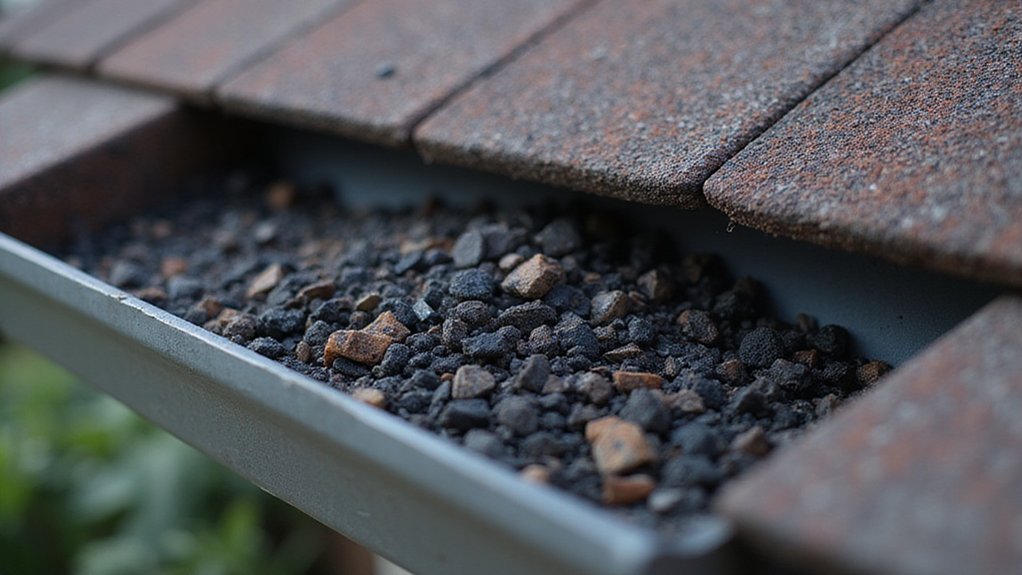
As your roof’s shingles age and deteriorate from exposure to sun, wind, and rain, they shed tiny granules that collect in your gutters and downspouts. You’ll notice these dark, sand-like particles accumulating in substantial amounts, which signals that your shingles are breaking down. This granule loss is significant because those protective particles shield the underlying asphalt from UV rays and weather damage. When you observe excessive granule buildup, it indicates accelerated shingle deterioration is occurring. Check your gutters regularly during spring and fall, as heavy granule deposits suggest your roof’s lifespan is diminishing. If you find considerable amounts, combined with other warning signs, you should contact a roofing professional for inspection. Prompt action prevents further structural damage and potential interior water intrusion.
Sagging or Uneven Roof Surface
One of the most serious warning signs you’ll notice is when your roof’s surface develops visible dips, sags, or uneven areas that weren’t present before. These deformations typically indicate structural damage, water damage, or deteriorating support beams beneath your roof’s framework. You’ll want to inspect your roof from a distance, looking along the roofline for any noticeable waviness or drooping sections. Sagging areas suggest that your roof’s underlying structure isn’t adequately supporting the weight it carries, which poses significant safety risks to your home and anyone inside it. When you identify sagging or unevenness, you shouldn’t delay scheduling a professional roof inspection. A qualified roofer will determine whether repairs can address the problem or whether you’ll need complete roof replacement. Addressing this issue promptly prevents further structural deterioration and potential interior water damage.
Daylight Visible Through the Attic
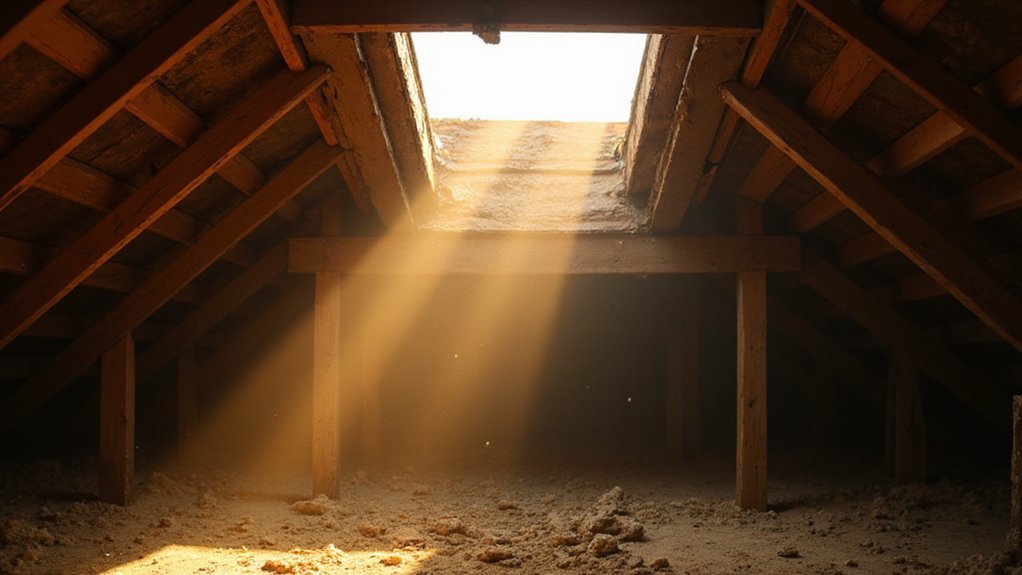
If you can see sunlight streaming through cracks or holes in your attic, you’ve got a serious problem that needs immediate attention because those openings mean your roof’s protective barrier‘s been compromised. When daylight penetrates your attic space, water will inevitably follow during rain or snow, leading to moisture damage, mold growth, and structural deterioration. You’ll also notice increased energy bills because heated or cooled air escapes through these gaps, forcing your HVAC system to work harder. Check your attic regularly during daylight hours, looking for any visible light sources along the roof deck and around vents, chimneys, and flashing. Even small openings warrant professional inspection, as they indicate your roof can no longer adequately protect your home’s interior. This condition demands immediate roof replacement.
Moss and Algae Spreading Across Your Roof
While moss and algae growth might seem like a minor cosmetic issue, you’ll want to take it seriously because these organisms can substantially damage your roof’s structural integrity and lifespan. Moss and algae retain moisture against your shingles, creating conditions that promote rot and deterioration. The moisture also weakens the adhesive bonding your shingles together, causing them to lift and curl, which allows water to seep underneath and damage the underlying layers. Additionally, these organisms can clog your gutters and downspouts, preventing proper water drainage and leading to water damage inside your home. You should address moss and algae growth promptly by cleaning your roof or hiring professionals, and consider installing zinc or copper strips that naturally prevent regrowth.
Shingles That Curl, Cup, or Buckle at the Edges
Beyond visible moss and algae, you’ll want to inspect your shingles for physical deformation, as curling, cupping, or buckling at the edges represents another serious warning sign that your roof’s health is deteriorating. These deformations occur when shingles lose their flexibility due to age, excessive heat exposure, or moisture damage. Curling happens when edges lift upward, cupping creates a bowl-like appearance, and buckling causes wavy distortions across the surface. When you notice these issues, you’re looking at compromised shingles that can’t protect your home effectively. Water can seep underneath deformed shingles, leading to leaks and structural damage inside your attic and walls. Addressing this problem promptly by replacing your roof prevents costlier repairs and protects your home’s integrity.
Rising Heating and Cooling Bills From a Failing Roof
When your roof deteriorates, it can’t insulate your home properly, which means your heating and cooling systems must work harder to maintain comfortable indoor temperatures. A failing roof allows air to escape during winter and enter during summer, forcing your HVAC system into overdrive. You’ll notice your monthly energy bills climbing unexpectedly, even when your usage patterns haven’t changed. This energy waste happens because damaged roofing materials develop gaps, cracks, and poor ventilation that compromise your home’s thermal envelope. If you’re experiencing sudden increases in heating and cooling costs without explanation, your roof may be failing. Addressing roof damage promptly prevents further energy loss and reduces strain on your systems, ultimately saving you money on utilities while improving your home’s efficiency.
Roof Age Beyond the Expected Lifespan
Your roof’s age is one of the most straightforward indicators of whether it’s time for replacement, and this factor matters just as much as the energy efficiency problems you might already be experiencing. Most asphalt shingle roofs, which are the most common type, typically last between 20 to 25 years before they need replacing. If your roof’s already reached or exceeded this age range, you shouldn’t wait for additional warning signs to appear. You can find your roof’s installation date through your home’s documentation or by contacting your original roofing contractor. Once your roof reaches its expected lifespan, the materials begin deteriorating rapidly, making replacement a practical investment in your home’s protection and longevity.
Damage From Recent Storms or Impact Events
Severe weather events like hail, high winds, and heavy rain can cause significant damage to your roof that isn’t always immediately visible from the ground, which is why you’ll want to inspect your roof carefully after any major storm or impact incident. Look for missing or cracked shingles, dents in metal components, and exposed underlayment or wood. Check your attic for water stains, leaks, or daylight coming through the roof. Don’t ignore even small damage, as it can worsen quickly and lead to interior water damage, mold growth, and structural deterioration. After storms, document any visible damage with photos for insurance claims. If you notice extensive damage or multiple problem areas, you’ll likely need roof replacement rather than simple repairs.
Conclusion
You’ll want to act quickly if you’ve noticed any warning signs, because roofs typically last 20-25 years, yet studies show that nearly 40% of homeowners delay roof replacement despite visible damage. By addressing problems early, you’re protecting your home’s structure, preventing costly water damage, and maintaining energy efficiency. Don’t wait until leaks become severe; contact a professional roofer today for a thorough inspection and expert guidance on your roof’s condition.