
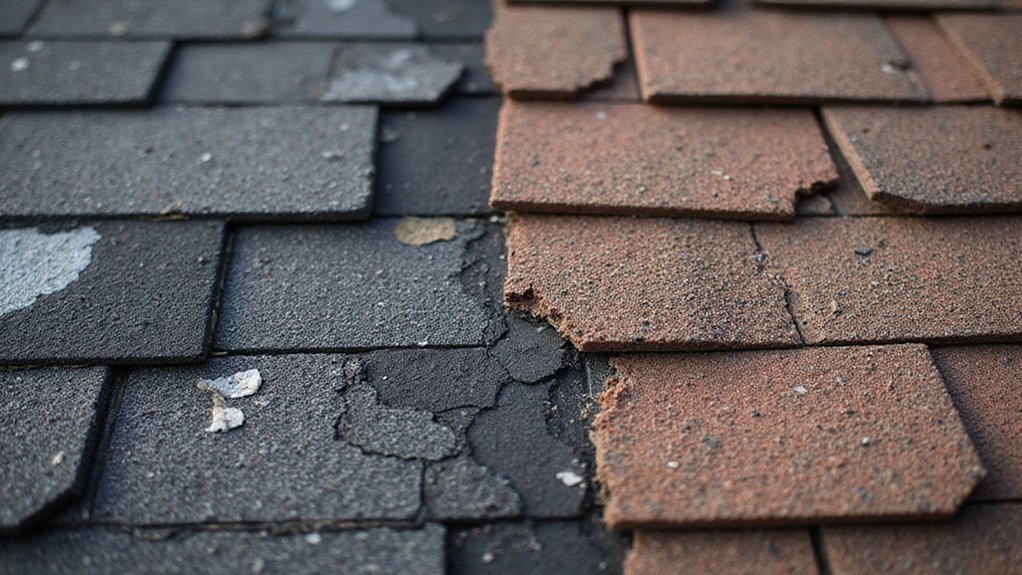
Your roof is like a car—minor repairs keep it running, but eventually the maintenance costs exceed the vehicle’s value. You face a critical decision: should you patch that leak, or invest in a complete replacement? The answer depends on your roof’s age, damage extent, and financial situation. Understanding the factors that tip the scales one way or the other will determine whether you’re throwing money away or making a smart investment.
When Roof Repair Isn’t Worth It: The Age Factor
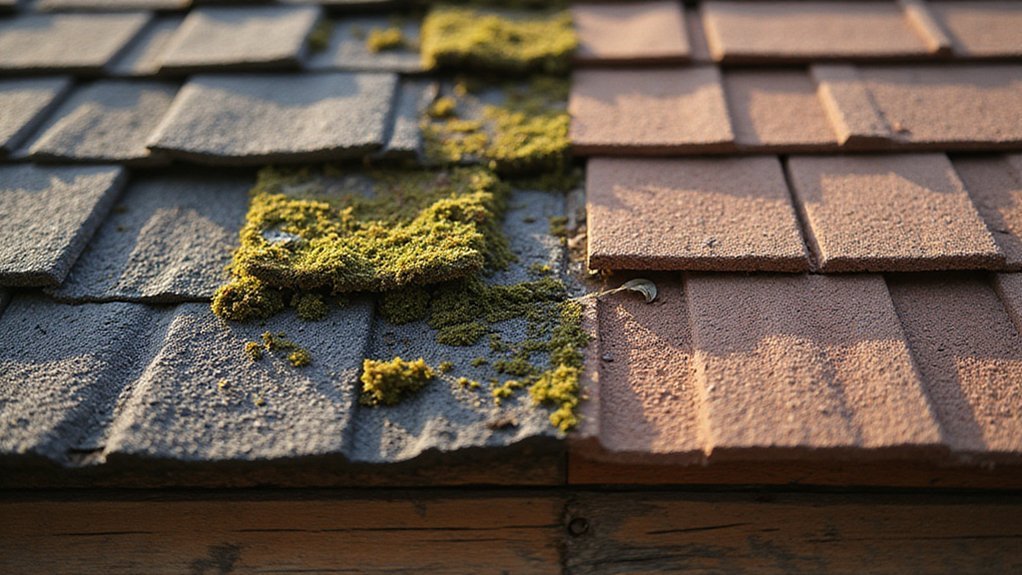
Most roofs typically last between 15 to 25 years, depending on the materials used and how well you’ve maintained them, which means that eventually you’ll face a critical decision about whether fixing individual problems makes financial sense or whether replacing the entire roof is the smarter choice. If your roof’s nearing the end of its expected lifespan, repairs become increasingly expensive and less worthwhile because you’re investing money into a structure that’ll soon fail anyway. You’ll want to calculate whether spending thousands on repairs makes sense when your roof might need complete replacement within a few years. Consider getting a professional inspection to determine your roof’s actual age and condition, then weigh repair costs against replacement expenses to make the most financially responsible decision for your home.
What’s Your Real Return on a New Roof?
When you’re considering whether to replace your roof, you’ll want to understand what financial benefit you’re actually getting from that investment, because a new roof doesn’t just protect your home—it can also affect your property’s value, your insurance costs, and your ability to sell your house when the time comes. Most homeowners recover about 60 to 80 percent of their roof replacement costs through increased home value, though this varies by location and market conditions. You’ll also see reduced insurance premiums since insurers charge less for homes with new roofs. Additionally, a quality replacement roof typically lasts 20 to 30 years, providing long-term protection that prevents expensive water damage and structural problems, making it a worthwhile investment for your home’s future.
How to Calculate Repair Costs by Damage Type
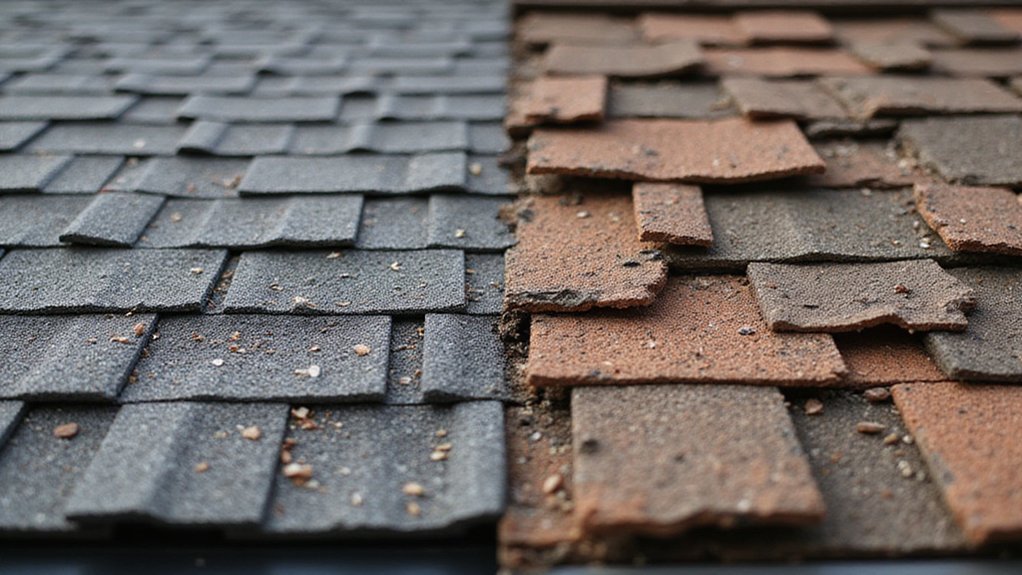
Understanding the costs associated with repairing your roof depends heavily on identifying the specific type of damage you’re dealing with, because different problems require different solutions and carry different price tags. Shingle damage, which involves missing or cracked shingles, typically costs between $150 and $400 per repair, while flashing issues around chimneys and vents run $200 to $600. Leak repairs that require interior damage assessment cost $300 to $1,000 depending on severity. Moss or algae removal ranges from $200 to $500, while sagging roof structures indicating structural problems demand $1,000 to $3,000 or more. You’ll want to document your damage type and get multiple contractor quotes to accurately compare costs before deciding between repair and replacement options.
Roof Repair: When It Makes Financial Sense
Because roof repairs typically cost significantly less upfront than full replacements, they’ll often make financial sense when your roof’s overall condition remains relatively sound and you’re dealing with isolated damage in just one or two areas. You should consider repairs if your roof is less than 15-20 years old, since it still has considerable lifespan remaining. Calculate whether repair costs exceed 25-30% of replacement costs; if they’re below this threshold, repairs become the practical choice. Additionally, assess the damage location—localized leaks, missing shingles, or flashing issues justify repairs more readily than widespread deterioration. By choosing repairs strategically, you’ll extend your roof’s life while preserving your budget for other necessary home maintenance expenses down the road.
Roof Replacement: Why It’s Worth the Upfront Cost
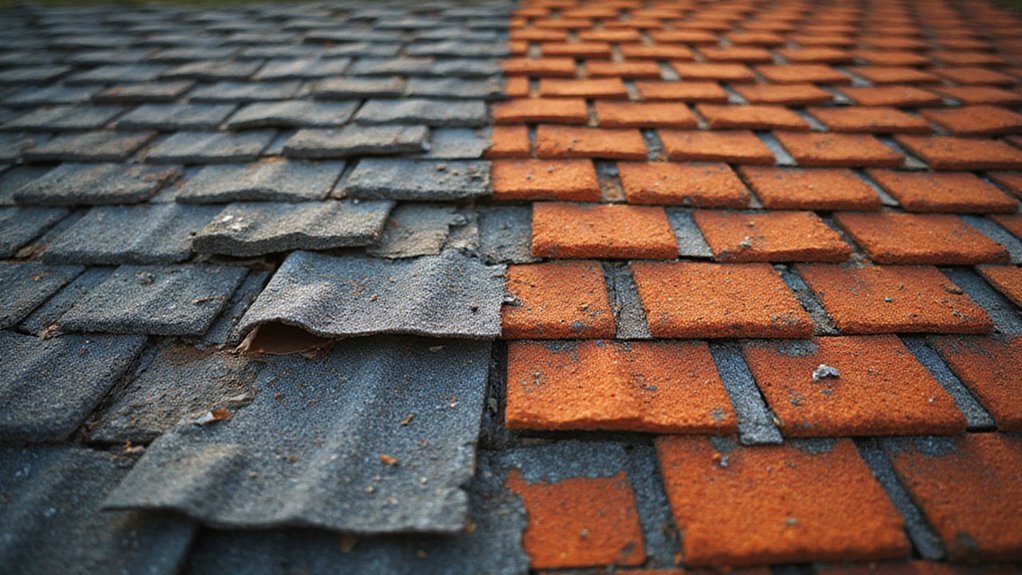
While roof repairs work well for minor, isolated problems, there’ll come a time when your roof’s condition warrants a complete replacement instead of patching up individual issues. A new roof provides extensive protection that extends across your entire home, eliminating weak spots that repairs can’t address. You’ll gain a new warranty covering materials and workmanship, offering peace of mind for decades. Replacement prevents recurring repair expenses that accumulate over time, ultimately costing more than one upfront investment. Modern roofing materials improve energy efficiency, reducing heating and cooling costs substantially. Additionally, a new roof enhances your home’s curb appeal and resale value, making it an investment that pays dividends when selling. Though expensive initially, replacement proves economically sensible for aging or heavily damaged roofs.
How a New Roof Cuts Your Energy Bills
Your home’s roof plays a crucial role in regulating interior temperature, and when you install a new roof with modern materials and proper insulation, you’ll notice a significant reduction in the energy your heating and cooling systems must expend to maintain comfortable indoor conditions. Modern roofing materials reflect more sunlight and heat away from your home, which means your air conditioning won’t work as hard during summer months. In winter, improved insulation beneath new roofing keeps warm air from escaping, reducing heating demands. These efficiency gains translate directly into lower monthly utility bills. Additionally, many new roofing systems qualify for energy efficiency tax credits and rebates, further offsetting your initial investment and accelerating your return on investment over time.
Insurance Coverage: What It Pays for Repair vs. Replacement
Insurance policies don’t treat roof repairs and replacements the same way, and understanding the distinction between what your homeowner’s insurance will cover in each scenario is essential to making informed financial decisions about your roof’s future. Most insurance companies’ll cover repairs resulting from sudden, accidental damage like storm damage or fallen trees, but they typically won’t pay for repairs caused by wear and tear or poor maintenance. Roof replacements, however, fall into a different category—your insurer’ll usually cover full replacement only if damage is extensive and deemed beyond repair. Additionally, you’ll need to review your policy’s deductible, which you’ll pay out-of-pocket before coverage begins. Understanding these coverage specifics helps you determine whether repair or replacement is financially feasible for your particular situation.
Signs You Need Repair vs. Replacement
Because recognizing the difference between minor roof damage and major structural problems‘ll help you avoid costly mistakes, you’ll want to know what specific signs indicate whether a repair or full replacement is necessary. Small isolated leaks, missing shingles, or damaged flashing typically warrant repair, especially if your roof’s under ten years old. However, you’ll need replacement if you’re experiencing widespread leaking across multiple areas, sagging sections indicating structural compromise, or if your roof’s approaching or exceeding its lifespan. Additional replacement indicators include granule loss covering large sections, extensive moss or algae growth suggesting deterioration, multiple previous repairs clustering together, or visible daylight through attic spaces. Age matters substantially: roofs typically last fifteen to twenty-five years depending on materials and climate conditions in your region.
3 Costly Mistakes Homeowners Make When Choosing Repair vs. Replacement
When you’re facing roof damage, it’s easy to make decisions that’ll cost you thousands of dollars in the long run, especially if you don’t take time to understand what you’re really dealing with. One major mistake is ignoring small problems until they become catastrophic, requiring full replacement instead of simple repairs. You might also underestimate your roof’s age, which profoundly influences whether repair or replacement makes financial sense. Another costly error involves choosing the cheapest contractor without verifying credentials or comparing multiple quotes. Additionally, you’ll regret not getting professional inspections that identify hidden damage beneath visible surfaces. Finally, many homeowners neglect to check their insurance coverage before making decisions, potentially missing opportunities for claim reimbursement that could offset expenses considerably.
Your Roof Decision Checklist: 7 Questions to Ask Before You Decide
Seven key questions can guide you toward making the right choice between repair and replacement, helping you avoid the costly mistakes that many homeowners face when dealing with roof damage. First, ask yourself how old your roof is, since most roofs last 15-25 years depending on materials used. Second, determine the extent of the damage by identifying whether you’re dealing with isolated leaks or widespread deterioration across multiple areas. Third, consider your budget constraints and compare repair costs against replacement expenses. Fourth, evaluate whether you’ve experienced repeated repairs on the same sections, indicating systemic problems. Fifth, check your roof’s overall condition by examining sagging areas or missing shingles. Sixth, review your home’s resale value implications. Finally, consult local building codes and your insurance coverage details before deciding.
Conclusion
You’ll want to weigh your roof’s age, repair costs, and long-term savings carefully before deciding. Studies show that homeowners who replace aging roofs recover approximately 60-70% of their investment through increased property value, making it a financially sound choice when your roof exceeds 15-20 years old. By answering the seven checklist questions and considering insurance coverage, you’ll make an informed decision that protects your home’s structural integrity and your wallet.