
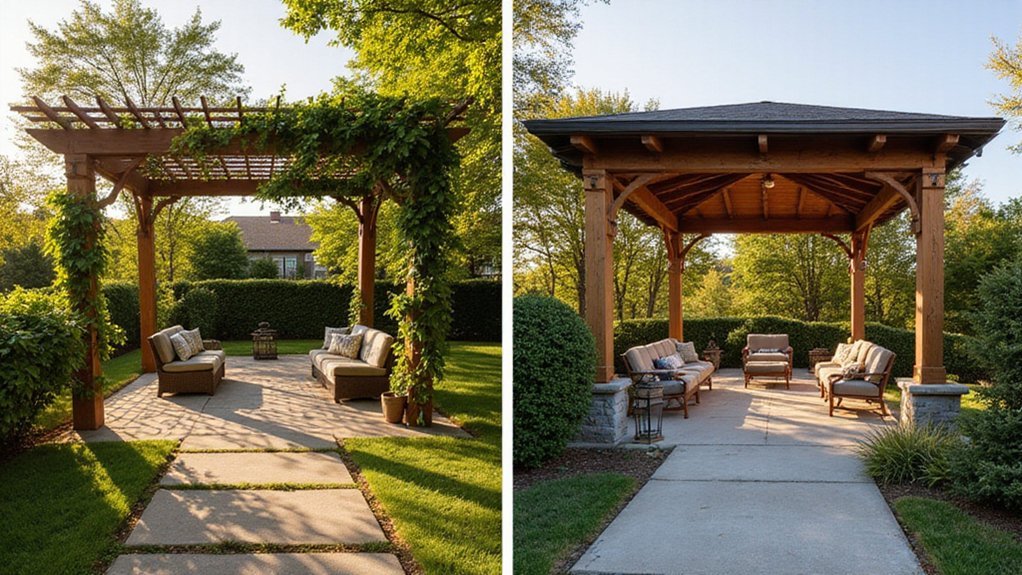
Picture your backyard on a hot summer day—you’re deciding between two structures that’ll transform your outdoor space. You’re faced with a choice: do you want the breezy, open feel of a pergola, or the solid protection a pavilion provides? The answer depends on your climate, how you’ll use the space, and what you’re willing to spend. Understanding these differences will help you make the right investment.
Open Roofs vs. Solid Roofs: The Core Difference
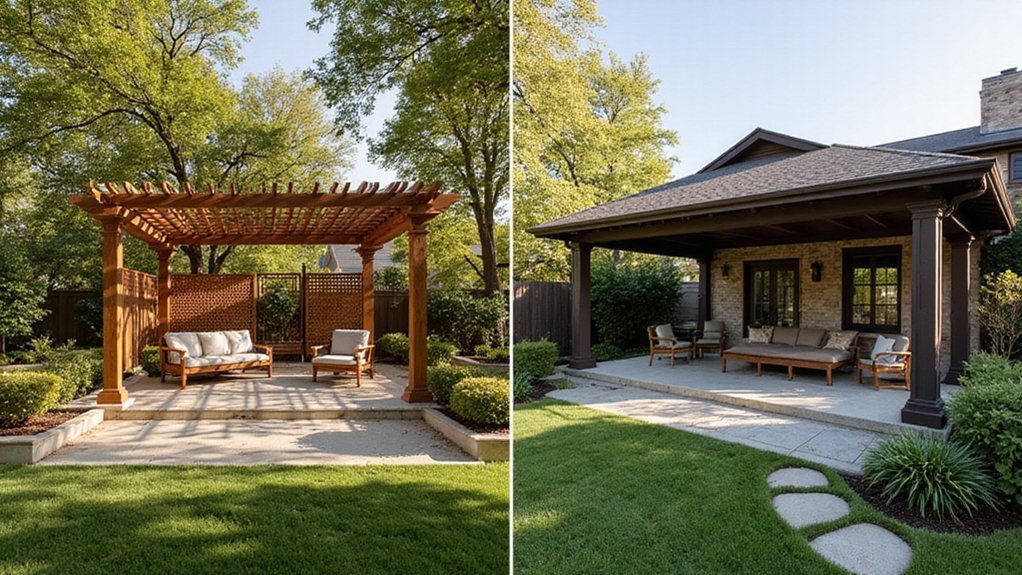
When you’re deciding between a pergola and a pavilion, the most significant difference you’ll notice is how each structure handles its roof design, which fundamentally affects how it functions in your outdoor space. A pergola features an open roof with crossbeams or slats that allow sunlight and rain to filter through, creating dappled shade and maintaining airflow. Conversely, a pavilion has a solid, complete roof that provides full protection from sun and rain, functioning similarly to a permanent shelter. Your choice depends on your needs: if you want partial shade and don’t mind some weather exposure, a pergola works well. However, if you require thorough protection for outdoor gatherings and activities, a pavilion offers superior coverage and reliability during unpredictable weather conditions.
Which One Fits Your Backyard Use Case?
Understanding the roof difference between these structures sets the stage for determining which option actually works best for your specific outdoor plans and lifestyle. If you’re hosting frequent gatherings where you’ll need protection from rain and intense sun, a pavilion’s solid roof delivers the reliability you’re seeking. However, if you prioritize creating a shaded retreat while maintaining an open, airy atmosphere, a pergola suits your needs better. Consider your climate: areas with heavy rainfall favor pavilions, while regions with moderate sun exposure work well with pergolas. Think about your maintenance willingness too—pergolas require less upkeep, whereas pavilions demand regular roof inspections and repairs. Evaluate your budget constraints as well, since pavilions typically cost more due to their complex construction and durable materials.
Shade and Weather Protection: Which Offers More Coverage?
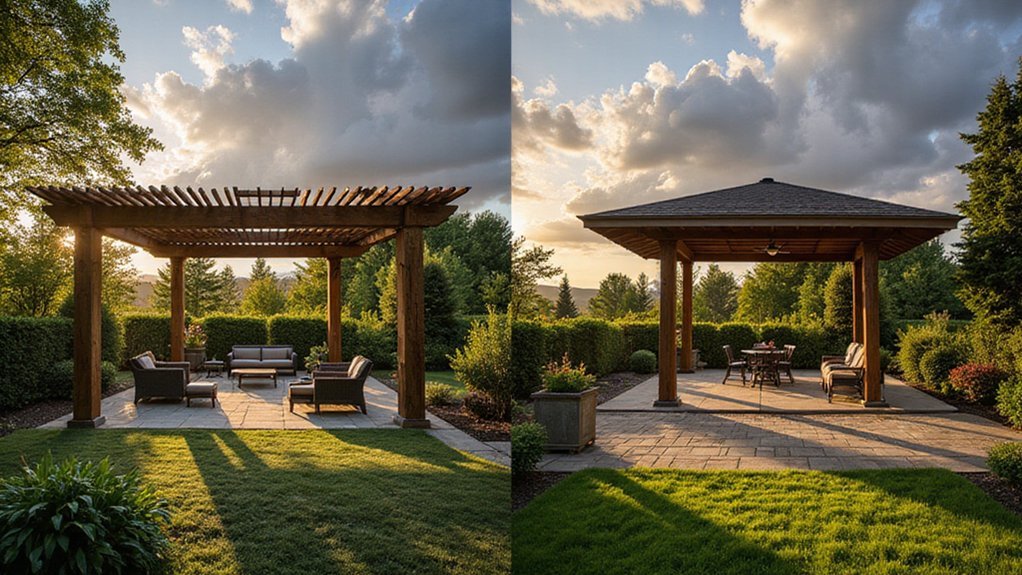
The roof structure you choose determines how well your outdoor structure‘ll protect you from sun and rain, and this difference matters considerably depending on what weather conditions you face regularly. Pavilions offer superior coverage because they feature solid, all-inclusive roofs that shield you from both direct sunlight and heavy precipitation, making them ideal for regions with frequent storms or intense sun exposure. Pergolas, conversely, provide partial shade through their slatted roof design, allowing dappled sunlight to filter through while offering minimal rain protection. If you’re seeking thorough weather defense for outdoor dining or entertaining, a pavilion delivers better functionality. However, if you prefer filtered light and don’t mind occasional wet conditions, a pergola suits your needs effectively and provides adequate summer cooling through air circulation beneath its open framework.
Cost Comparison: Budget for Your Outdoor Structure
Once you’ve decided whether you prioritize weather protection or aesthetic appeal, your budget becomes the next practical consideration that’ll shape your final choice between these two popular outdoor structures. Pergolas typically cost less initially, ranging from $1,000 to $4,000 for basic models, making them ideal if you’re working with limited funds. Pavilions, however, require more substantial investment, generally costing $3,000 to $15,000 or higher, since they demand stronger structural support and more extensive materials. You should also factor in installation expenses, which vary based on complexity and local labor rates. Consider maintenance costs too, as both structures need periodic upkeep. Calculate your total budget carefully, including potential future repairs, so you can confidently select the structure that fits your financial situation while meeting your outdoor living needs.
Installation and Maintenance: What’s Easier?
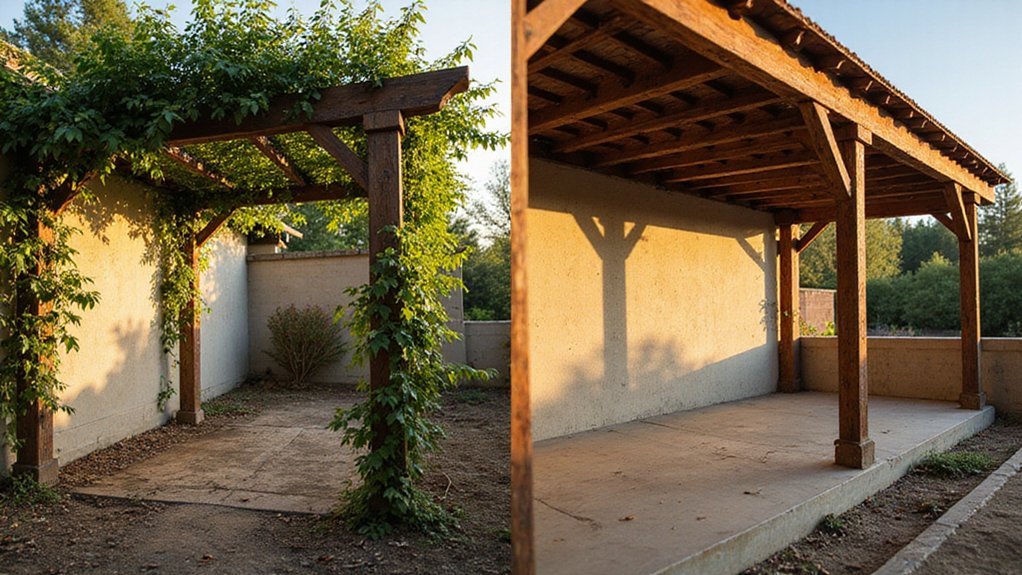
If you’re weighing the practical side of owning an outdoor structure, installation and maintenance requirements deserve careful consideration, as they’ll directly impact how much time and effort you’ll invest after your initial purchase. Pergolas typically require simpler installation since they’re open-frame structures with minimal components, while pavilions demand more complex assembly due to their roofing systems and additional support requirements. For maintenance, pergolas need occasional wood treatment and debris clearing, whereas pavilions require more extensive upkeep, including roof inspections, gutter cleaning, and potential repairs to their covering materials. You’ll find that pergolas demand less ongoing attention and lower maintenance costs over time. However, if you’re willing to invest more effort, a pavilion’s superior weather protection might justify the additional maintenance demands your backyard situation requires.
Design Styles: Matching Your Home’s Architecture
Beyond practical considerations like installation and maintenance, you’ll want to think carefully about how your outdoor structure complements your home’s existing architectural style, since a well-matched design enhances your property’s overall appearance and can even increase its visual appeal and value. Pergolas work well with modern, contemporary, and Mediterranean homes because of their open-roof design and clean lines. Pavilions suit traditional, colonial, and rustic properties because their solid roofs create defined, shelter-like spaces. You should examine your home’s exterior materials, colors, and design elements when deciding between these structures. Consider whether your residence features wood, brick, stone, or siding, then select an outdoor structure that incorporates similar materials and finishes. This cohesive approach guarantees your backyard enhancement feels intentional and integrated.
Space Requirements: How Much Room Do You Need?
Both pergolas and pavilions require adequate yard space to function properly and look proportionate to your home, so you’ll need to measure your available area before committing to either structure. Pergolas typically need less space since they’re narrower and work well in compact yards, often fitting in areas as small as 8 by 10 feet. Pavilions, however, demand considerably more room because they’re larger and enclosed, requiring a minimum of 12 by 16 feet to function effectively. You’ll also need to ponder clearance around your structure for pathways, furniture placement, and future landscaping adjustments. Measure your yard carefully, accounting for existing trees, utilities, and property lines, ensuring your chosen structure leaves adequate open space for movement and enjoyment.
Building Permits and Zoning: What You Can’t Ignore
Before you break ground on your pergola or pavilion, you’ll need to navigate the legal requirements that your local government has established, which typically include obtaining building permits and verifying that your structure complies with zoning regulations specific to your area. Most municipalities require permits for structures exceeding certain height or square footage limits, and pavilions, being larger and more permanent, typically demand more rigorous approval processes than pergolas. You’ll want to contact your local building department to determine setback requirements, which specify how far your structure must sit from property lines and neighboring homes. Additionally, check whether your structure needs electrical inspections or foundation requirements. Zoning laws also dictate where you can place outdoor structures, so understanding these regulations before construction prevents costly removals or fines.
Can You Upgrade or Customize These Structures?
Once you’ve secured the proper permits and confirmed your structure meets local zoning requirements, you’ll want to ponder, contemplate, or deliberate how you can personalize your pergola or pavilion to better suit your needs and preferences. Both structures offer significant customization opportunities that enhance functionality and aesthetics. You can add shade options like retractable screens, shade cloth, or polycarbonate panels to your pergola, while pavilions benefit from ceiling fans, lighting fixtures, and weatherproof materials. Consider installing built-in seating, storage benches, or planters along the perimeter. You can also incorporate heating elements, such as outdoor heaters or fire pits, depending on your climate and local regulations. Paint or stain treatments allow you to match your home’s exterior, while decorative elements like string lights or climbing vines add personality to either structure.
Pergola or Pavilion: Which Solves Your Problem?
How do you determine which structure’ll actually work best for your specific outdoor situation? Start by evaluating your primary needs: if you’re seeking shade without full coverage, a pergola provides dappled light and an open aesthetic that complements modern designs. However, if you need complete weather protection for gatherings and outdoor dining, a pavilion delivers thorough shelter from rain and intense sun. Consider your budget constraints, as pavilions typically require larger investments due to their enclosed design and structural complexity. Evaluate your yard’s dimensions carefully—pergolas work well in smaller spaces, while pavilions demand more square footage. Finally, examine your maintenance capacity, since pergolas need regular upkeep for climbing plants, whereas pavilions require periodic roof inspections and structural maintenance.
Conclusion
You’ve now discovered that choosing between a pergola and pavilion isn’t actually complicated, despite the countless factors you’ll consider. You’ll find that your climate, budget, and how you’ll use your space will ultimately make the decision for you, ironically making your research both essential and almost unnecessary. Select the structure that matches your specific needs, and you’ll wonder why you ever hesitated.