
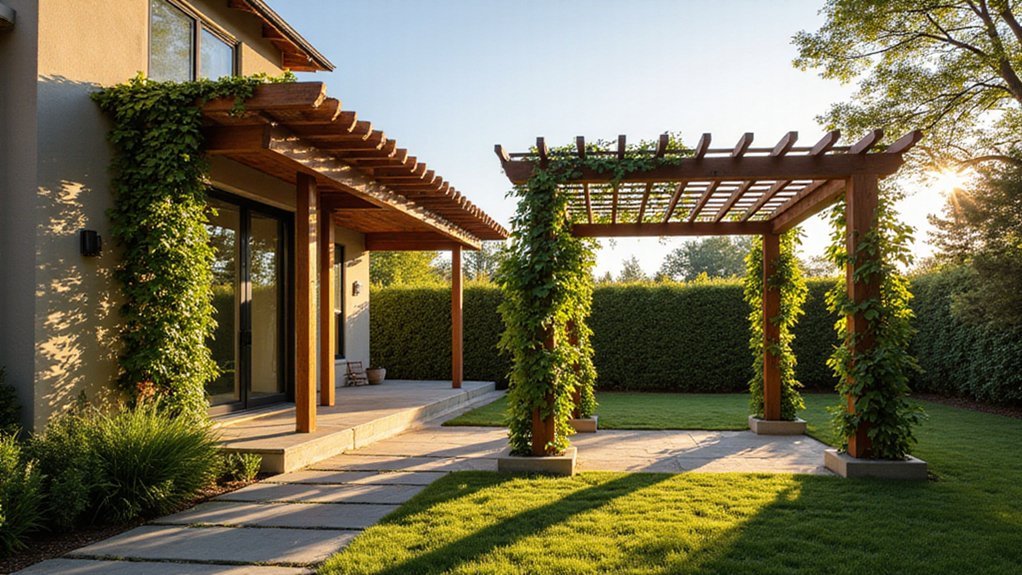
You’re facing a significant outdoor decision that’ll affect your budget, yard layout, and long-term enjoyment. An attached pergola leverages your home’s structure, cutting costs and installation time. A freestanding pergola demands more investment but grants you complete placement freedom. Before you commit to either option, you’ll need to understand how your lot size, budget constraints, and future plans intersect with each choice.
Attached vs. Freestanding Pergolas: Core Differences

When you’re deciding between an attached or freestanding pergola, understanding their fundamental differences is essential because each style offers distinct advantages that’ll affect how you use the structure and where you can place it on your property. An attached pergola connects directly to your home, utilizing one or more sides of your house for support, which makes installation simpler and more cost-effective. A freestanding pergola stands independently in your yard, requiring its own complete support system and foundation. This independence means you can position it anywhere on your property, regardless of house placement. Attached pergolas save space and materials, while freestanding designs offer greater flexibility for garden layouts and landscaping arrangements. Your choice depends on your property’s layout and how you plan to use the structure.
Budget Comparison: Which Option Costs Less?
Because an attached pergola relies on your home’s existing structure for support, you’ll typically spend less money upfront compared to a freestanding design, though the actual cost difference depends on several important factors including materials, size, and your local labor rates. Attached pergolas generally require fewer materials since they’re anchored directly to your home, reducing the amount of lumber and hardware you’ll need to purchase. Freestanding pergolas, however, demand a complete foundation and independent support system, which increases material costs considerably. You should also consider installation expenses, as attached versions often require less labor since they don’t need extensive ground preparation. When calculating your budget, obtain quotes from local contractors who understand your region’s specific pricing structures and building requirements.
Your Pergola Decision Checklist: 5 Key Questions

Now that you’ve understood the financial differences between these two options, you’re ready to make a final decision by answering five straightforward questions that’ll guide you toward the pergola design that’s right for your specific situation. First, ask yourself whether you’ve got space for a freestanding structure, since attached pergolas require less yard area. Second, consider your home’s architectural style and whether you want the pergola connected or separate. Third, evaluate your budget constraints, knowing attached options typically cost less. Fourth, determine what activities you’ll pursue under your pergola, as this influences size and placement requirements. Finally, assess your long-term plans for your property, considering whether you might relocate or modify your outdoor space considerably.
How Lot Size and Layout Affect Your Choice
Your lot size and layout play critical roles in determining which pergola style’ll work best for your property, since the physical dimensions of your outdoor space directly influence both the feasibility and functionality of each option. If you’re working with a smaller lot, a freestanding pergola offers flexibility because you can position it anywhere without needing wall space, whereas an attached pergola requires adequate wall length and may feel cramped in tight quarters. Conversely, larger properties benefit from attached pergolas that extend your home’s usable living area, creating seamless shifts between indoor and outdoor spaces. Consider your lot’s shape, existing structures, and future expansion plans, as these factors determine which style’ll maximize your space while supporting your lifestyle needs and aesthetic goals effectively.
Foundation and Installation Difficulty: What to Expect

When you’re deciding between an attached and freestanding pergola, understanding the foundation requirements and installation complexity for each option’ll help you make a more informed choice about which project suits your skills and budget. Attached pergolas require securing one side to your house, which demands careful fastening to your structure’s existing framework and potentially reinforcing your exterior walls. Freestanding pergolas need independent foundations, typically concrete footings dug below the frost line, making them more labor-intensive initially. However, freestanding installations offer flexibility since you won’t need to modify your home’s structure. If you’re comfortable with basic construction, an attached pergola might seem simpler, yet freestanding options provide greater placement freedom without structural concerns about your residence.
How Attached vs. Freestanding Pergolas Affect Your Home’s Look
The aesthetic impact of your pergola choice extends beyond the structure itself and influences how your entire property appears to visitors and passersby, since attached pergolas visually extend your home’s footprint while freestanding pergolas create distinct focal points in your landscape. When you attach a pergola to your house, it seamlessly blends with your home’s existing architecture, creating a unified appearance that enhances curb appeal through continuity. Conversely, a freestanding pergola functions as an independent landscape feature that draws attention to specific areas like gardens or patios, allowing you to define separate outdoor rooms. Your choice determines whether your outdoor space feels connected to your home or establishes its own visual identity within your yard’s overall design scheme.
Creating Separate Spaces in Your Yard With Freestanding Pergolas
Freestanding pergolas offer you the practical ability to divide your yard into distinct zones, each with its own purpose and character, which goes beyond simply creating visual interest in your landscape. You can position a pergola to separate your entertaining area from a quiet garden space, allowing different activities to coexist without interference. This strategic placement lets you create a dining zone under one structure while designating a relaxation area nearby. You’ll find that freestanding pergolas work particularly well in larger yards where you need defined boundaries without permanent walls. By arranging multiple pergolas thoughtfully, you’re fundamentally building outdoor rooms that function independently yet remain visually connected to your overall yard design, maximizing your property’s usability and appeal.
Maintaining Your Pergola: Material and Durability Differences
Your choice of materials will greatly impact how much maintenance your pergola requires and how long it’ll last before needing repairs or replacement. Wood pergolas demand regular staining, sealing, and inspection for rot and insects, typically requiring maintenance every two to three years. Vinyl pergolas resist weathering and need only occasional cleaning with soap and water, making them lower-maintenance options. Metal pergolas, whether aluminum or steel, require rust prevention through protective coatings and periodic touch-ups. Composite materials offer a middle ground, resisting decay without the upkeep wood demands, though they’re more expensive initially. Consider your climate’s moisture levels, temperature fluctuations, and UV exposure when selecting materials, as these factors directly influence durability and maintenance frequency.
When an Attached Pergola Makes Sense (and When It Doesn’t)
Before you decide whether to attach a pergola directly to your home’s structure or build it as a standalone unit, you’ll want to ponder several practical factors that’ll influence your long-term satisfaction with the project. An attached pergola makes sense when you’re seeking shade directly outside your door or creating a seamless linkage between indoor and outdoor spaces. However, you shouldn’t attach one if your home’s exterior needs repairs, lacks proper support beams, or sits in an area prone to structural settling. Additionally, if you value flexibility in redesigning your yard or plan to move soon, a freestanding pergola offers superior advantages. Consider your home’s architectural style, drainage patterns around your foundation, and local building codes before committing to attachment.
When a Freestanding Pergola Makes Sense (and When It Doesn’t)
If you’re looking for maximum flexibility and independence in your outdoor design, a freestanding pergola can be an excellent choice because it doesn’t rely on your home’s structure for support and can be positioned anywhere in your yard to suit your needs. Freestanding pergolas work well when you want to create distinct outdoor zones, define garden pathways, or establish shaded areas away from your house. They’re ideal if you’re renting or prefer not to modify your home’s exterior. However, freestanding pergolas require deeper foundation work for stability and demand more open yard space than attached versions. They’re also less convenient for connecting to your home’s utilities or extending your living space directly. Consider your yard’s layout, soil conditions, and long-term plans before choosing this option.
Conclusion
You’ll find that choosing between attached and freestanding pergolas isn’t about picking a winner, but rather finding the right key for your specific lock. Consider your budget constraints, available space, and installation capabilities carefully, as each option serves different needs. An attached pergola saves money and leverages existing structures, while a freestanding design offers flexibility and independence. Evaluate your yard’s layout and long-term outdoor living goals systematically to make your decision confidently.