
Your metal siding panels are a significant investment that requires consistent care to maintain their appearance and protect your home. By establishing a structured maintenance routine—including regular cleaning, inspections, and protective treatments—you can prevent costly damage and keep your siding looking pristine for decades. However, most homeowners don’t realize that one overlooked maintenance task can compromise your entire system, leading to water damage and structural problems that become increasingly expensive to fix.
Clean Metal Siding Twice a Year (and Do It Safely)
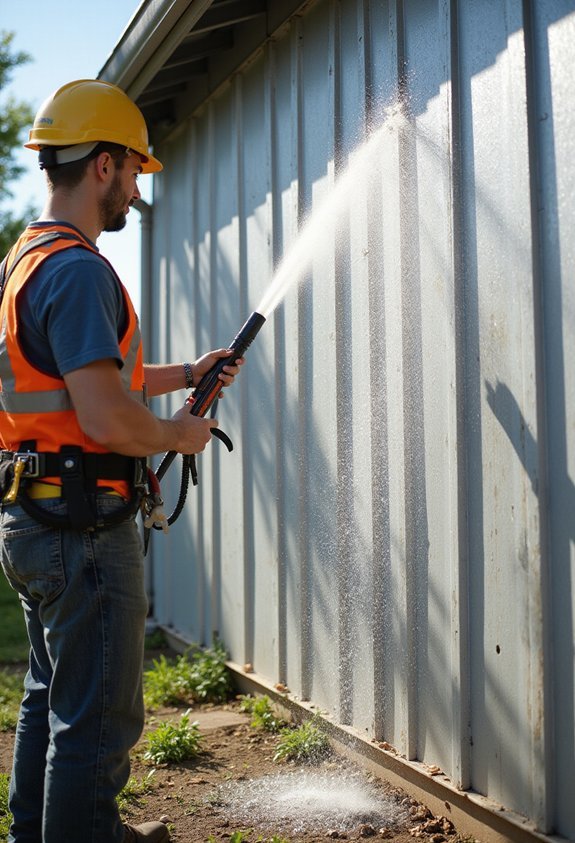
Because metal siding panels are constantly exposed to the elements, they’ll accumulate dirt, dust, pollen, and other debris that can damage the finish if you don’t remove it regularly. You should clean your metal siding twice yearly, ideally in spring and fall, to guarantee its appearance.
Start by spraying your siding with a garden hose to loosen surface debris. For stubborn stains, use a soft-bristled brush with mild soap and water, working from top to bottom in overlapping strokes. Avoid high-pressure washers, which can dent panels and force water behind seams, causing rust and deterioration.
Always wear safety equipment, including gloves and eye protection, when cleaning at heights. Use stable ladders and never overreach, as falls pose serious injury risks. Proper safety precautions will protect both yourself and your investment.
Check for Rust, Dents, and Damaged Seals
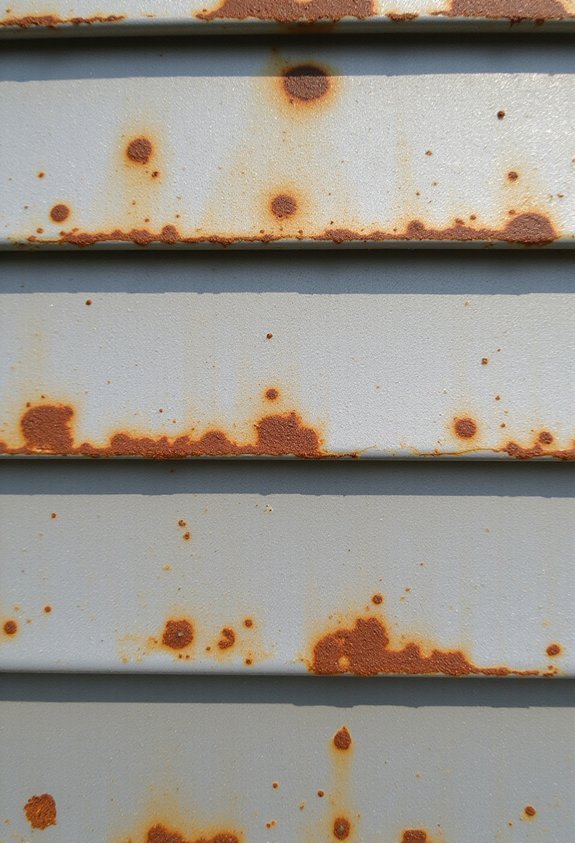
While you’re cleaning your metal siding, you’ll want to inspect it carefully for signs of damage that could lead to bigger problems down the road. Look for rust spots, which appear as reddish-brown discoloration on the metal surface, and address them immediately by scrubbing with a wire brush and applying rust-preventative coating. Check for dents or creases that might trap water and cause deterioration underneath. Examine all seals around windows, doors, and joints where two panels meet, ensuring they’re intact and haven’t cracked or pulled away from the metal. Damaged seals allow moisture to seep behind your siding, potentially causing mold growth and structural damage. By catching these issues early during your inspection, you’ll prevent costly repairs and maintain your siding’s protective quality.
Use the Right Tools and Solutions for Your Siding
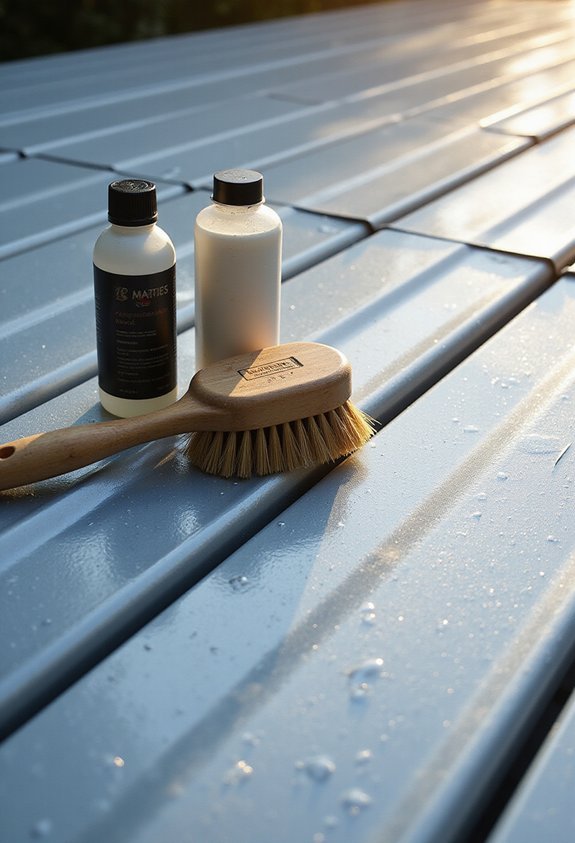
Selecting the appropriate tools and cleaning solutions for your metal siding is critical because different materials and finishes require specific care to avoid damage during maintenance. You’ll want to use soft-bristled brushes or cloths rather than abrasive scrubbers that’ll scratch the surface. For aluminum siding, mild soap and water work effectively, while steel panels may benefit from specialized metal cleaners that prevent rust formation. Always verify the manufacturer’s recommendations before applying any solution, as some coatings are sensitive to harsh chemicals. You should test cleaning products on inconspicuous areas first to guarantee compatibility. Soft-pressure washing equipment can be useful when properly adjusted, but high-pressure settings will dent panels and damage protective coatings irreparably.
Seal the Finish With Wax or Protective Coating
After you’ve cleaned your metal siding thoroughly, applying a protective sealant is the next critical step to extend your panels’ lifespan and maintain their appearance. You’ll want to choose between two main options: automotive wax or specialized metal coating products. Automotive wax works well for mild climates and provides a glossy finish that repels water and dirt. For harsher environments, metal-specific protective coatings offer superior durability and weather resistance. Apply the sealant evenly across all panels using a soft cloth or applicator, working in small sections to guarantee complete coverage. Allow adequate drying time between coats, typically two to four hours, depending on product instructions. Reapply your chosen sealant annually or every eighteen months to preserve optimal protection and keep your metal siding looking new.
Treat Mold, Mildew, and Organic Growth
Because metal siding panels create ideal conditions for mold and mildew growth—particularly in damp, shaded areas—you’ll need to address these issues promptly to prevent damage and maintain your home’s appearance. Start by mixing a solution of one part household bleach with three parts water, then apply it directly to affected areas using a soft-bristled brush. Scrub gently in circular motions to avoid scratching the metal surface. For stubborn organic growth, you may need to let the solution sit for 10-15 minutes before scrubbing. Rinse thoroughly with clean water and allow the panels to dry completely. Consider applying a mold-inhibiting sealant after cleaning to reduce future growth. Regular inspections, especially during humid seasons, help you catch problems early before they spread or cause permanent discoloration.
Repair Scratches and Small Damage Immediately
Even minor scratches and dents in metal siding panels can quickly lead to serious problems, so you’ll want to address them as soon as you notice them. Small breaks in the protective coating expose the underlying metal to moisture and oxygen, which causes rust to form beneath the surface. Once rust starts, it spreads rapidly and compromises the structural integrity of your panels. To repair scratches, you’ll need to clean the damaged area thoroughly, then apply a rust-inhibiting primer followed by matching paint. For small dents that don’t break the coating, you can often leave them alone, but monitor them closely for any signs of cracking or rust development. By acting quickly on damage, you’ll prevent expensive repairs down the road.
Caulk Seams and Seal Around Fasteners
While repairing visible damage prevents rust from spreading outward, you’ll also need to stop moisture from entering through the gaps where your siding panels connect to each other and where fasteners penetrate the surface. Apply high-quality exterior caulk along all seams between panels, filling these joints completely to prevent water infiltration. For fasteners like nails and screws, use roofing caulk or sealant specifically designed for metal surfaces, applying it around each fastener head where it meets the siding. Allow all caulk to cure fully according to manufacturer instructions before exposing the panels to moisture. Inspect these sealed areas annually, as caulk deteriorates over time and may need reapplication every three to five years to maintain ideal protection.
Manage Moisture and Trim Back Vegetation
Two primary threats to your metal siding’s longevity are moisture accumulation and vegetation growth, both of which you’ll need to address regularly to prevent rust formation and structural damage. You should inspect your gutters and downspouts quarterly, guaranteeing they’re directing water away from your foundation and siding. Clear any debris that blocks proper drainage, as standing water creates ideal conditions for corrosion.
Trim back trees, shrubs, and vines that grow within two feet of your siding, since they trap moisture against the metal surface. Additionally, remove any moss or algae growth using a soft-bristled brush and mild detergent solution. Maintain proper air circulation around your home by maintaining clear spacing between vegetation and your exterior walls, which helps moisture evaporate quickly.
Know When to Repaint or Refinish
Because metal siding’s protective coating gradually breaks down over time due to exposure to sunlight, weather, and temperature changes, you’ll need to monitor your panels regularly to determine when repainting or refinishing becomes necessary. Look for visible signs of wear, including fading color, chalky residue on the surface, or areas where the paint’s peeling or flaking away. You should also inspect for rust spots or corrosion, which indicate the coating’s failed and protection’s compromised. Generally, you’ll repaint every 10 to 15 years, though your climate and environmental conditions may require more frequent maintenance. If you notice significant deterioration affecting multiple panels, refinishing the entire siding becomes more practical than patching individual sections, ensuring uniform appearance and consistent protection.
Get a Professional Inspection Every 3–5 Years
Regular visual inspections you perform yourself can help you spot obvious problems, but a trained professional brings specialized knowledge and equipment that’ll catch issues you might miss during routine checks. Professional inspectors examine your metal siding for hidden corrosion, fastener deterioration, and sealant failures that compromise your panels’ integrity. They’ll identify moisture infiltration, rust development, and structural damage requiring immediate attention before they worsen. During a thorough inspection every three to five years, professionals document your siding’s condition, create detailed reports, and recommend necessary repairs or refinishing. This proactive approach prevents costly problems from developing and extends your siding’s lifespan considerably. Scheduling regular professional inspections safeguards your metal panels maintain their protective qualities and appearance, ultimately protecting your home’s value and structural integrity.
Conclusion
You’ve now got the knowledge to keep your metal siding looking pristine for decades, but aren’t you wondering how much longer your home’s exterior will last when you follow these consistent maintenance steps? By cleaning biannually, addressing rust and damage promptly, applying protective coatings, and scheduling professional inspections every three to five years, you’re investing in your home’s structural integrity and curb appeal simultaneously.