
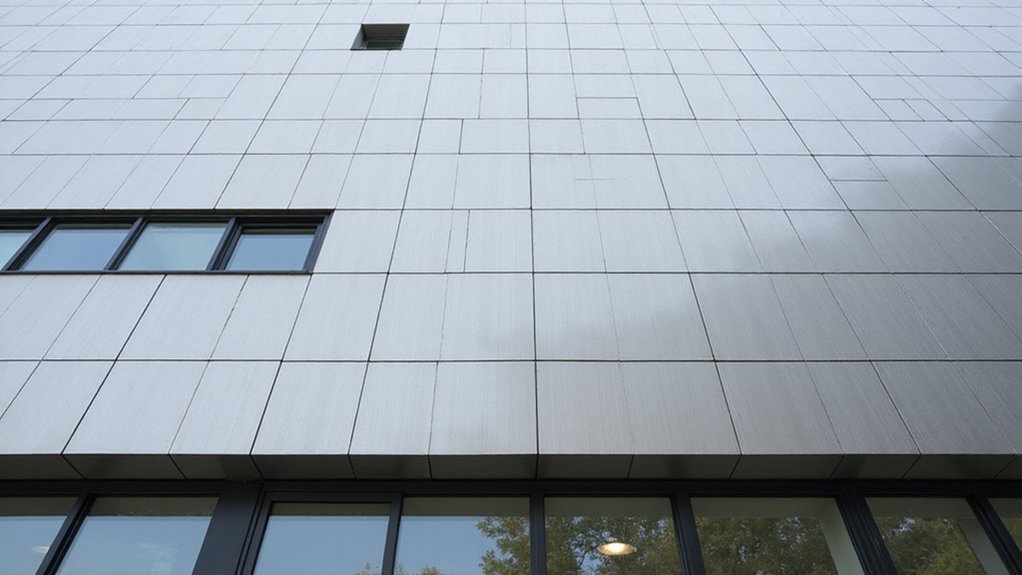
Picture a building facade of unbroken metal surfaces, where every line aligns with geometric precision. When you’re designing a minimalist structure, you’ll find that metal siding panels offer something glass and masonry can’t: seamless continuity without visual interruption. But here’s what most architects don’t realize about metal’s true potential—and why choosing the right type matters more than you’d expect.
Why Minimalism Demands Metal (Not Glass or Masonry)
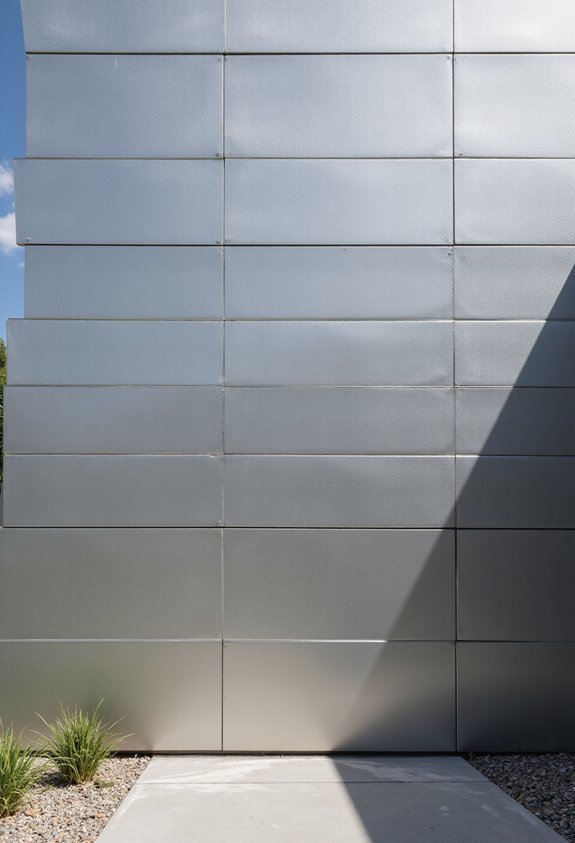
When you’re designing a minimalist facade, you’ll find that metal siding panels outperform both glass and masonry in achieving the clean, uncluttered aesthetic that minimalism requires. Glass creates visual clutter through reflections and interior visibility, which contradicts minimalism’s core principle of simplicity. Masonry, with its textured surfaces and grout lines, introduces unnecessary visual complexity that distracts from the building’s pure form. Metal panels, however, offer smooth, continuous surfaces that emphasize clean lines and geometric precision. They’re lightweight, allowing you to design expansive wall areas without structural complications. Metal’s uniform appearance creates the seamless, uninterrupted visual effect that minimalist architecture demands, while its durability guarantees your facade maintains its crisp, polished look for decades without requiring excessive maintenance or replacement.
Metal vs. Masonry, Glass, and Fiber Cement: The Trade-Offs
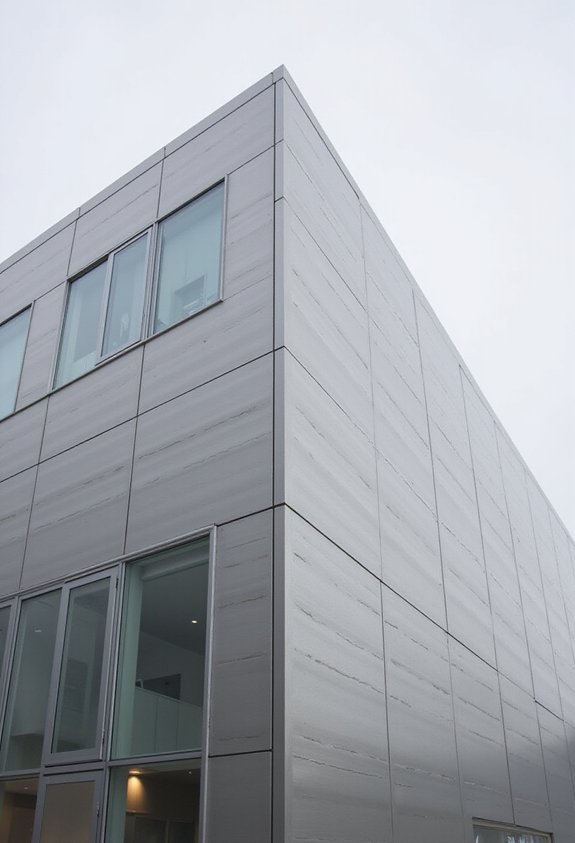
Although metal siding panels excel at creating minimalist facades, they’re not without compromises when you compare them to other materials. Masonry offers superior durability and thermal mass, but it requires more maintenance and doesn’t achieve metal’s sleek aesthetic. Glass provides transparency and modern appeal, yet it demands frequent cleaning and offers minimal insulation value. Fiber cement delivers excellent weather resistance and can mimic various textures, however it’s heavier than metal and more difficult to install. Metal panels, by contrast, deliver lightweight construction, low maintenance requirements, and clean lines that define minimalism. You’ll sacrifice some thermal performance compared to masonry, but gain superior longevity and design flexibility. Understanding these trade-offs helps you select the material that best matches your project’s specific requirements, budget constraints, and aesthetic vision.
Choose Your Metal: Zinc, Aluminum, or Copper
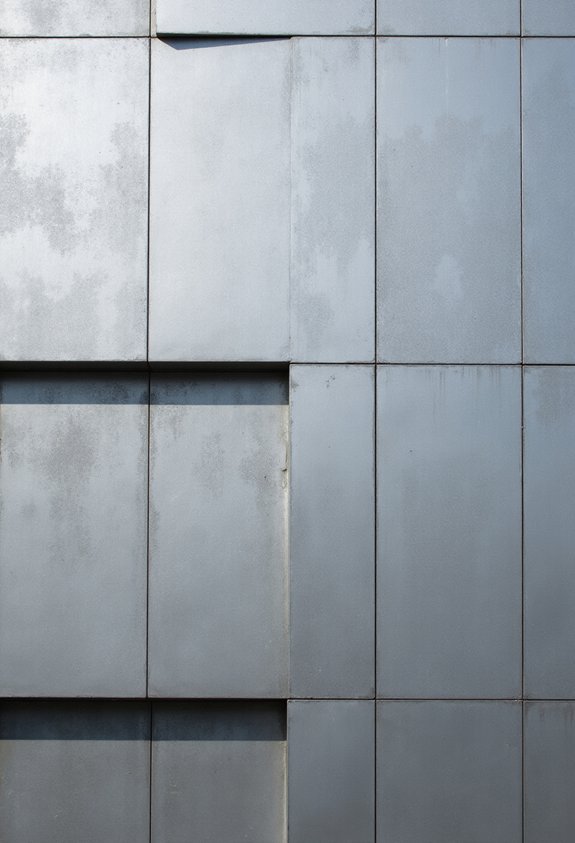
Once you’ve decided that metal siding panels suit your minimalist design, you’ll need to select which metal type works best for your project, since each option brings distinct advantages and limitations to your facade. Zinc develops a protective gray patina over time, offering excellent durability and low maintenance requirements. Aluminum provides lightweight installation, superior corrosion resistance, and affordability, making it ideal for most climates. Copper delivers stunning visual appeal with its warm tones and natural weathering, though it’s considerably more expensive and requires specialized installation. Consider your budget constraints, climate conditions, and desired aesthetic outcome when evaluating these three metals. Each choice directly impacts your facade’s longevity, maintenance needs, and overall project cost.
Precision Engineering and Clean Lines Explained
Your choice of metal establishes the foundation for your facade, but it’s the precision engineering behind metal siding panels that truly brings minimalist design to life through clean, uninterrupted lines. When you install these panels, you’re working with components manufactured to exact specifications, ensuring each piece aligns perfectly with its neighbors. This precision eliminates visible gaps, overlaps, and irregularities that would disrupt your minimalist aesthetic. The engineering process involves computer-aided design and factory-controlled production, which guarantees consistent dimensions and finishes across all panels. You’ll notice that properly engineered metal panels create seamless shifts between sections, allowing light to play across flat surfaces without obstruction. This attention to detail is what transforms basic materials into sophisticated architectural elements that define contemporary minimalist facades.
How to Install Metal Panels Seamlessly
When you’re ready to begin the installation process, understanding the foundational steps will guarantee that your metal panels align perfectly and maintain the minimalist aesthetic you’re aiming for. Start by measuring your facade dimensions carefully, marking vertical reference lines where each panel will sit. You’ll need to install horizontal support tracks that serve as anchors for your panels, ensuring they’re level and properly spaced. Next, position your first panel at the designated starting point, securing it with corrosion-resistant fasteners that won’t compromise your clean design. As you progress upward and horizontally, overlap each panel slightly according to manufacturer specifications, which prevents moisture infiltration while maintaining seamless appearance. Check alignment frequently using a level tool, making micro-adjustments before fully securing panels permanently.
Cost, Timeline, and What to Specify
Before you move forward with your metal panel project, it’s crucial to break down the financial investment, installation duration, and material specifications that’ll determine your project’s success. Metal siding costs typically range from $10 to $25 per square foot, depending on material quality and finish type. Installation timelines generally span two to six weeks, influenced by your facade’s complexity and weather conditions. You’ll need to specify panel thickness, gauge rating, coating system, and color standards with your supplier to guarantee consistency. Request detailed quotes that itemize labor, materials, and contingencies, then compare multiple contractors’ proposals. Document all specifications in writing to avoid misunderstandings during installation, protecting both your budget and timeline objectives.
How Metal Panels Handle Salt, Wind, and Temperature
How do metal panels withstand the harshest environmental conditions that’ll assault your building’s exterior? Modern metal siding uses protective coatings and galvanized steel to resist salt corrosion in coastal environments, guaranteeing rust and deterioration that’d compromise your facade’s integrity. Wind resistance comes from secure fastening systems and panel design that distributes forces evenly across your structure, keeping panels firmly attached during storms. Temperature fluctuations don’t crack metal like they do brick or stone because metal expands and contracts smoothly without developing stress fractures. Your panels maintain their minimalist appearance through superior durability, requiring minimal maintenance while resisting weathering that’d age other materials. By selecting high-quality finishes and proper installation techniques, you’ll secure your metal facade performs reliably across decades of environmental exposure without sacrificing its clean aesthetic.
Is Metal Actually Sustainable?
Why should you care whether metal siding panels truly qualify as a sustainable building material when you’re investing in your facade’s long-term performance? Metal panels aren’t perfect, but they offer notable environmental advantages when you consider their full lifecycle. You’ll find that aluminum and steel are highly recyclable, meaning old panels don’t necessarily end up in landfills. When you install metal siding, you’re choosing a material that lasts decades, reducing how often you’ll replace your facade. However, you should acknowledge that manufacturing metal requires significant energy, and transportation impacts add environmental costs. You’re making a practical choice that balances durability with recyclability, though it’s not completely carbon-neutral. By selecting metal panels, you’re prioritizing longevity over constantly replacing less durable materials.
What You Can (and Can’t) Customize
Once you’ve decided that metal siding panels fit your sustainability goals and performance needs, you’ll discover that customization options exist within specific boundaries. You can choose from various colors, finishes, and panel widths to match your design vision, and you’ll find that manufacturers offer both matte and glossy surfaces. However, you can’t alter the core material composition or structural properties without compromising performance. You can adjust panel thickness within standard ranges, but extreme modifications aren’t available. You’ll also customize drainage systems and attachment methods based on your climate zone. The key is understanding that manufacturers design these panels with specific engineering parameters, so while aesthetic choices remain flexible, fundamental specifications stay fixed to guarantee durability and weather resistance.
Metal Facades in Practice: 5 Contemporary Examples
Real-world applications of metal siding panels demonstrate how the customization principles we’ve discussed actually work when architects and builders implement them on active construction projects, and examining five distinct examples’ll show you the range of possibilities from residential homes to commercial buildings that’ve successfully utilized these materials. These case studies reveal how professionals select specific metal types, finishes, and panel configurations to achieve their design goals while managing budgets and maintenance requirements. You’ll observe how geometric layouts, color choices, and installation angles create visual impact without sacrificing functionality. Each example illustrates different problem-solving approaches, from maximizing durability in harsh climates to optimizing aesthetic appeal in urban environments. Understanding these practical implementations helps you make informed decisions about your own projects.
Conclusion
You’ve discovered that metal siding panels are your blueprint for achieving minimalist architecture, functioning like a sculptor’s chisel that strips away visual clutter while preserving durability. By selecting zinc, aluminum, or copper and mastering seamless installation techniques, you’re constructing facades that withstand harsh environments for decades. Your choice of metal materials doesn’t just create clean lines—it establishes a foundation for sustainable, low-maintenance designs that define contemporary building excellence.