
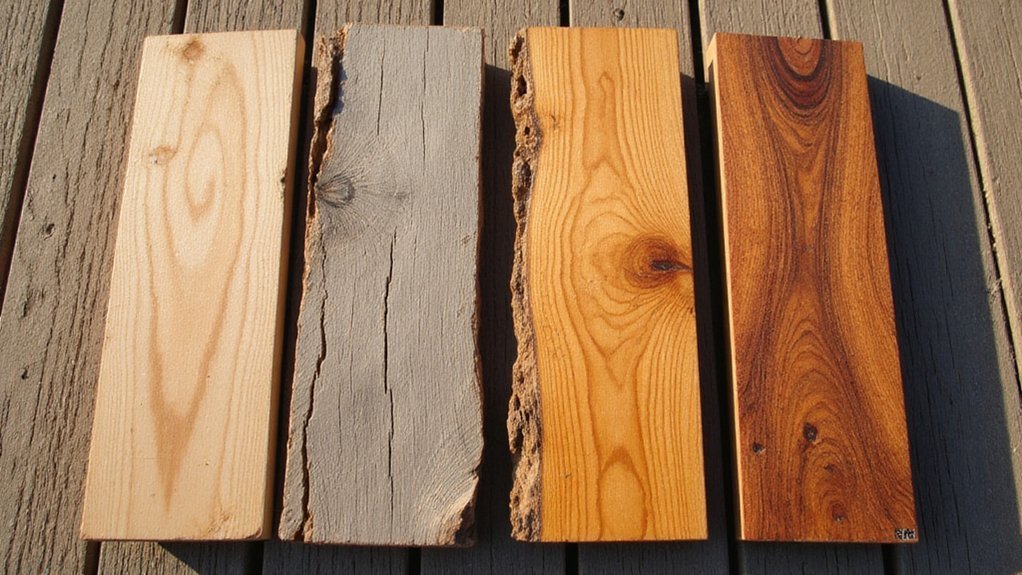
When you’re planning a pergola, selecting the right wood matters because your choice directly affects how long it’ll last, how much upkeep you’ll need to do, and what you’ll actually spend over time. You’ve got several options available, each with distinct advantages and drawbacks that depend on your budget, climate, and maintenance preferences. Understanding these differences will help you make an informed decision, but what exactly separates pressure-treated lumber from premium hardwoods?
Pressure-Treated Lumber: The Budget-Friendly Workhorse
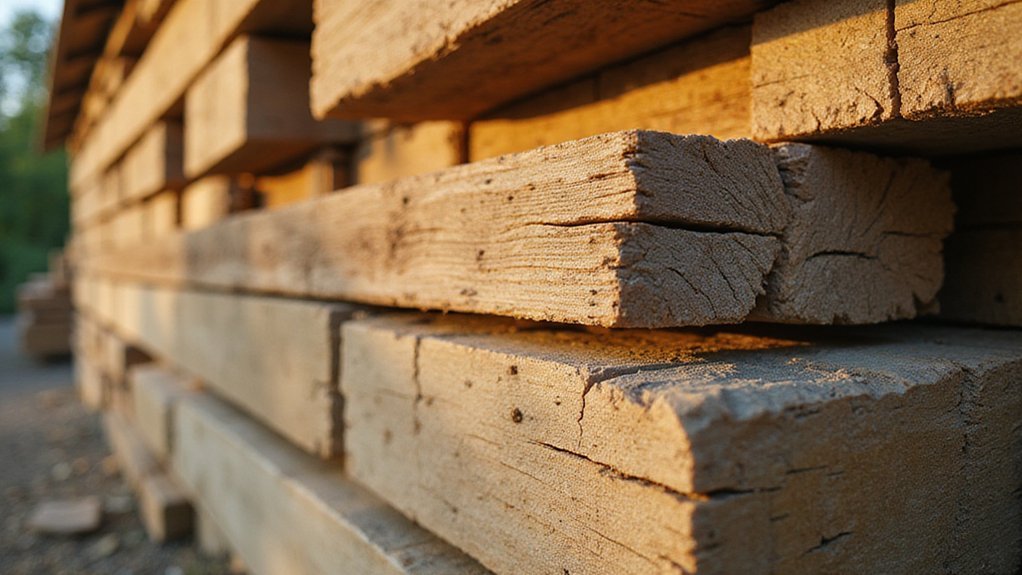
When you’re building a pergola on a budget, pressure-treated lumber stands out as one of your most practical options, offering you a combination of affordability and decent durability that’s hard to beat. This wood’s been chemically treated to resist rot, decay, and insect damage, which means your pergola won’t deteriorate quickly in outdoor conditions. You’ll appreciate that pressure-treated lumber costs markedly less than premium hardwoods like cedar or redwood, making it ideal when you’re watching your expenses carefully. The treatment process penetrates deep into the wood fibers, protecting against moisture and pest damage for many years. However, you should know that this lumber requires regular maintenance, including occasional staining or sealing, to maintain its appearance and longevity. It’s an economical choice that balances initial savings with reasonable long-term performance for pergola construction.
Cedar and Redwood: Premium Aesthetics With Moderate Durability
If you’re willing to invest a bit more upfront than pressure-treated lumber requires, cedar and redwood offer you a substantially more attractive appearance that’ll enhance your pergola’s visual appeal. Both woods feature natural reddish tones and fine grain patterns that age beautifully over time, developing a silvery-gray patina when exposed to weather. You’ll appreciate their natural resistance to rot and insects, which reduces maintenance demands compared to pressure-treated alternatives. However, these premium woods require periodic sealing or staining to maintain their color and extend their lifespan to 15-20 years. Cedar and redwood cost approximately two to three times more than pressure-treated lumber, making them ideal for homeowners who prioritize aesthetics and moderate durability within a reasonable budget.
Tropical Hardwoods: Maximum Rot Resistance at Premium Prices
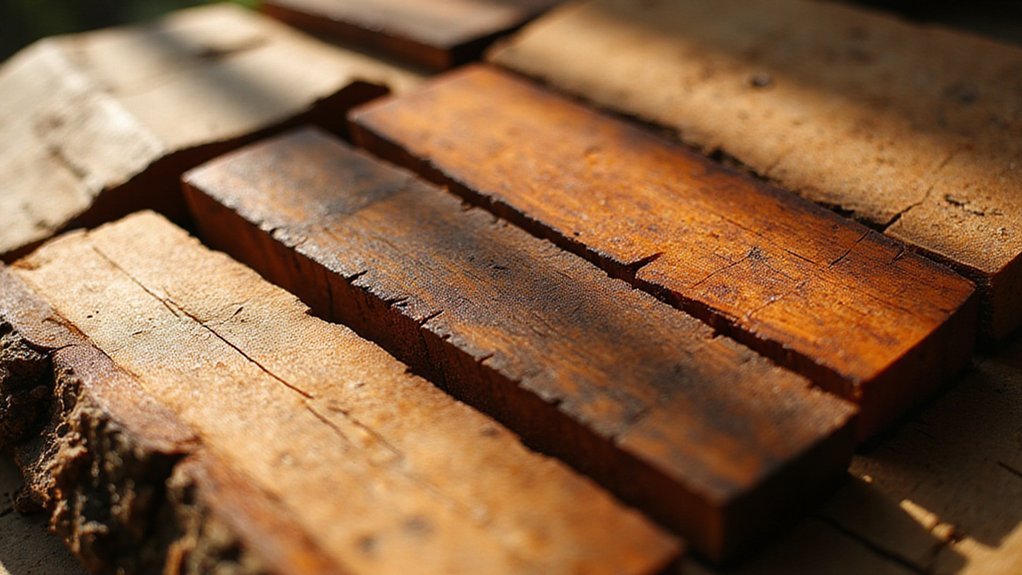
The most durable woods you can choose for your pergola come from tropical regions, including species like ipe, cumaru, and teak, which offer exceptional resistance to rot, insects, and weathering that’ll easily outlast cedar and redwood by decades. You’ll find these hardwoods are extremely dense, containing natural oils and compounds that protect against decay and pest damage without requiring chemical treatments. However, you’re looking at considerably higher costs, often three to five times more expensive than traditional softwoods. Installation becomes more challenging because tropical hardwoods are harder to cut and fasten, requiring specialized tools and experienced contractors. If you’re willing to invest upfront, you’re getting a pergola that’ll require minimal maintenance and potentially last fifty years or longer.
Composite and Alternative Materials: Non-Wood Pergola Options
For those seeking pergola materials that don’t involve natural wood, composite and alternative options have emerged as increasingly practical choices that offer distinct advantages over traditional lumber. Composite materials, which blend wood fibers with plastic polymers, resist rot, insects, and weathering without requiring staining or sealing. Vinyl pergolas provide lightweight, low-maintenance alternatives that won’t splinter or diminish noticeably. Aluminum structures deliver exceptional durability and strength while remaining relatively affordable. Fiberglass options offer superior strength-to-weight ratios, though they’re typically more expensive. Each material requires minimal maintenance compared to wood, saving you time and money over years of ownership. You’ll find that composite and alternative materials work best in situations where upkeep concerns outweigh initial cost considerations, making them worthwhile investments for many homeowners.
Evaluating Durability: Pressure Ratings and Rot Resistance Codes
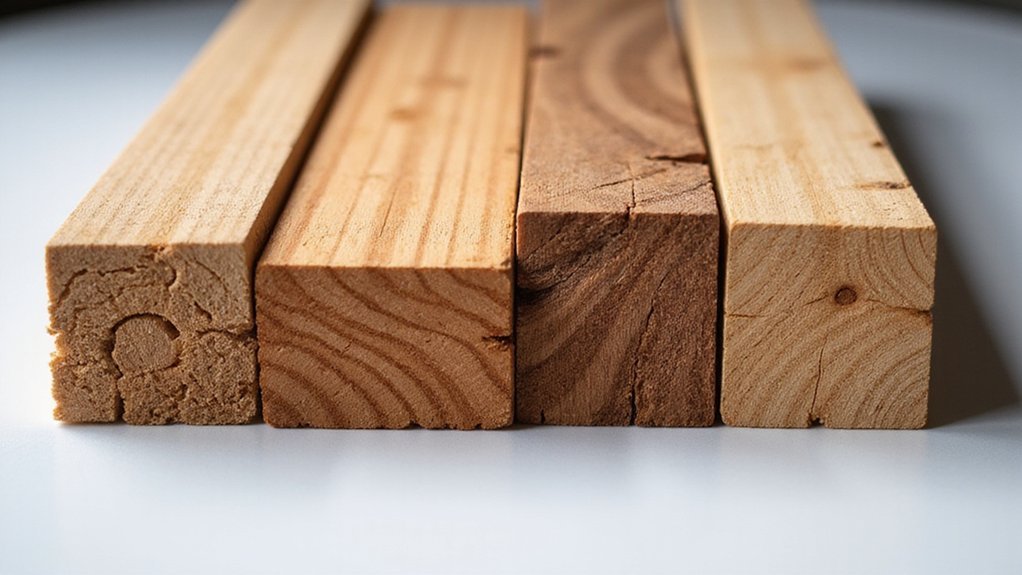
While composite and alternative materials eliminate many maintenance headaches, choosing traditional wood for your pergola requires you to understand how lumber resists decay and structural failure over time. Pressure ratings indicate how deeply preservatives penetrate the wood, with higher numbers signifying greater protection against rot and insect damage. You’ll encounter ratings like “Ground Contact” for wood touching soil and “Above Ground” for exposed beams. Rot resistance codes classify wood species by their natural durability, ranging from very durable to non-durable options. Pressure-treated lumber combines chemical treatments with naturally resistant species, offering extended lifespan in outdoor conditions. You should verify these ratings on your lumber’s documentation before purchasing, ensuring your pergola investment withstands weathering and pest threats effectively.
Wood Hardiness by Climate: Wet, Dry, and Freeze-Thaw Zones
Because your pergola’s location determines which wood species will perform best, you’ll need to assess your regional climate conditions before selecting lumber for construction. In wet climates, you’re facing constant moisture exposure, so choose naturally rot-resistant woods like cedar, redwood, or tropical hardwoods that won’t deteriorate quickly. For dry regions, you’ll have more flexibility since moisture-related decay is minimal, though you should still consider woods that resist checking and splitting from low humidity. In freeze-thaw zones, you’re dealing with expansion and contraction cycles caused by temperature fluctuations, which demand woods with minimal movement and excellent dimensional stability. Cedar and treated softwoods perform adequately here, but dense hardwoods provide superior results. Guaranteeing your specific climate zone safeguards your pergola’s structural soundness for decades.
Pergola Wood Costs: Material Prices and Long-Term Maintenance
Once you’ve identified which wood species will thrive in your climate zone, the financial side of your pergola project comes into focus, and you’ll need to weigh the upfront material costs against the long-term expenses you’ll face maintaining your structure over the years. Pressure-treated lumber offers affordability initially, typically costing less per board foot, but requires regular staining and sealing. Cedar and redwood demand higher upfront investment yet need less frequent maintenance. Tropical hardwoods like ipe cost extensively more but resist decay naturally, reducing long-term expenses. Calculate your total ownership cost by adding material prices, labor, and projected maintenance over ten to fifteen years. This extensive approach reveals which wood choice genuinely saves money throughout your pergola’s lifespan.
How Much Weight Can Your Pergola Hold?
Structural capacity—the maximum weight your pergola can safely support—depends on several interconnected factors that you’ll need to evaluate before installing fixtures, hanging plants, or climbing vines on your new structure. The wood species you’ve chosen profoundly impacts load-bearing ability, as hardwoods like cedar and redwood offer greater strength than softer options. Your pergola’s design matters equally; wider beam spacing reduces weight distribution, while closer spacing increases capacity. Post diameter, depth of footings, and concrete foundation quality directly influence stability and safety margins. Additionally, weather conditions, including wind load and snow accumulation in your region, demand consideration during planning phases. You should consult local building codes and potentially hire a structural engineer to verify that your specific configuration meets safety standards for your intended use.
Sealing and Staining: Keeping Your Pergola Young
Now that you’ve guaranteed your pergola’s structural integrity and load-bearing capacity, protecting your wood investment becomes the next priority, since exposure to sun, rain, and temperature fluctuations will gradually break down even the strongest wood fibers if left unprotected. You’ll want to apply a quality sealant every two to three years, which creates a protective barrier against moisture penetration and UV damage. Staining serves a dual purpose: it enhances your pergola’s aesthetic appeal while adding an extra layer of protection. You should choose between water-based or oil-based products based on your climate and wood type. Apply sealant or stain during dry weather conditions, ensuring proper ventilation and allowing adequate drying time between coats for maximum effectiveness and durability.
Installation Tips: Easier Woods vs. Trickier Builds
Because different wood species have distinct characteristics, you’ll find that some woods are considerably easier to work with during pergola installation than others, which means understanding these differences before you begin construction can safeguard you time, frustration, and money. Softwoods like pine and cedar are forgiving choices that you can cut, drill, and nail without specialized equipment or extensive experience. Their grain structure allows fasteners to sink smoothly without splitting. Hardwoods like cedar and redwood require more careful handling; you’ll need to pre-drill holes to prevent cracking and splitting. Pressure-treated lumber demands sharp saw blades and protective equipment during cutting. You should consider your skill level and available tools when selecting your wood, as matching wood type to your experience level guarantees successful, efficient installation with minimal complications.
Conclusion
You’ll find that choosing the right pergola wood depends on balancing your budget with long-term maintenance, as pressure-treated lumber saves money upfront but demands regular sealing, while cedar and redwood offer natural beauty with moderate durability, and tropical hardwoods provide maximum protection if you’re willing to invest considerably. Assessing your climate, local weather patterns, and total ownership costs guarantees you’ll construct a pergola that withstands time’s weathering effects.