
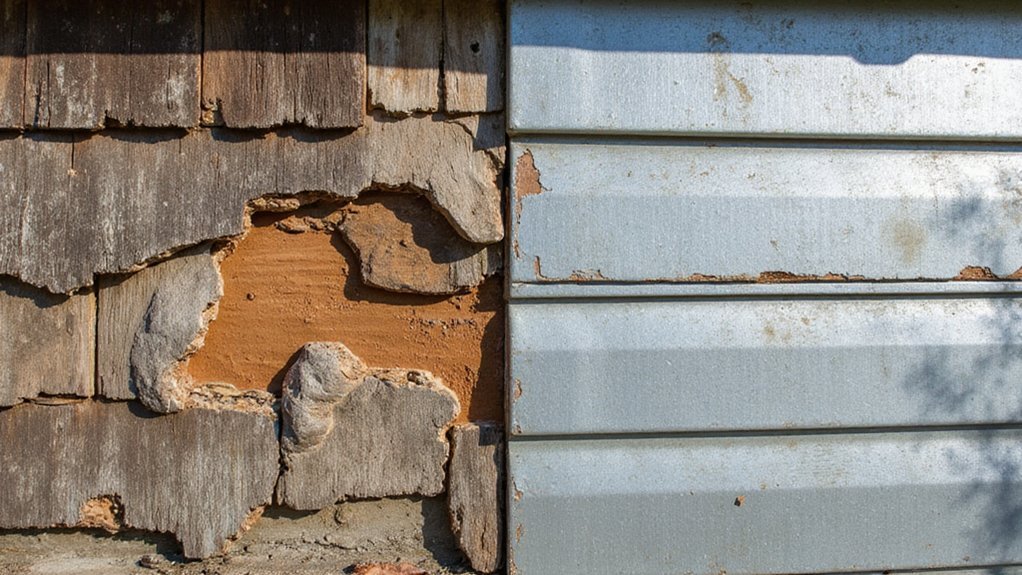
Picture your home’s exterior weathering decades of sun, rain, and storms while your wallet stays protected. You’re likely wondering whether metal siding panels justify their higher upfront costs through long-term savings and durability. This breakdown examines the actual numbers behind metal siding investments, comparing expenses across different materials, climate conditions, and timeframes to reveal when this choice truly pays off for your specific situation.
Is Metal Siding Right for Your Climate and Home Type?
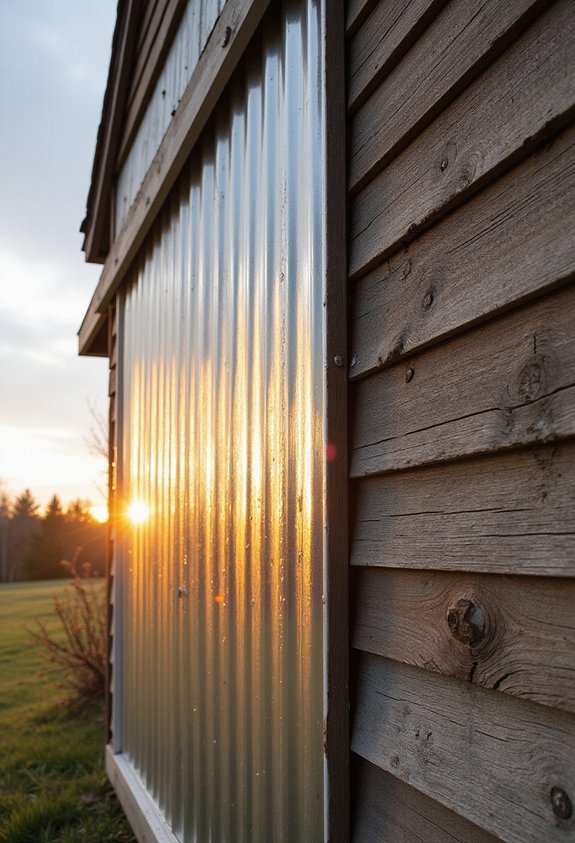
One of the most important decisions you’ll make when considering metal siding panels is whether they’re actually suited to your specific climate and home structure, since not all siding materials perform equally in every environment. You’ll want to evaluate your region’s weather patterns, including temperature fluctuations, humidity levels, and precipitation frequency. Metal siding excels in areas with moderate climates, resisting rust and corrosion better in drier regions. However, if you’re in a coastal zone with salt spray or extremely humid environment, you’ll need to invest in premium coatings for adequate protection. Additionally, consider your home’s architectural style and structural capacity, since metal panels require proper installation and support to prevent warping or damage during severe weather conditions.
Metal Siding Installation Costs: What You’ll Actually Pay
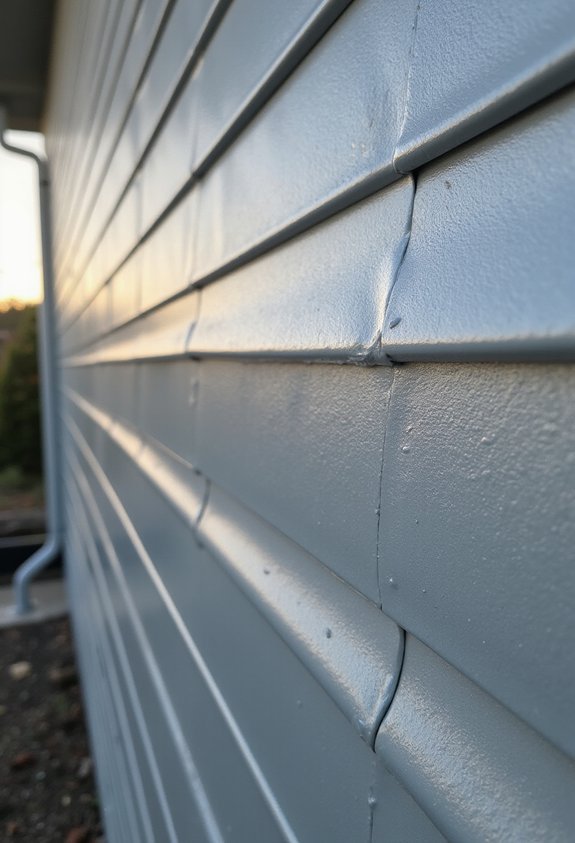
After you’ve confirmed that metal siding fits your climate and home structure, the next step is understanding how much you’ll actually spend to get it installed, since labor and material costs can vary dramatically depending on several factors. Your total installation expense depends on your home’s square footage, the metal type you choose, regional labor rates, and your contractor’s experience level. Material costs typically range from $3 to $10 per square foot, while labor costs add another $2 to $5 per square foot. A 2,000-square-foot home might cost between $10,000 and $30,000 total. Additional expenses include removal of old siding, which adds $1 to $3 per square foot, and potential structural repairs that contractors discover during installation.
Metal vs. Vinyl vs. Wood: Which Costs Less Over 30 Years?
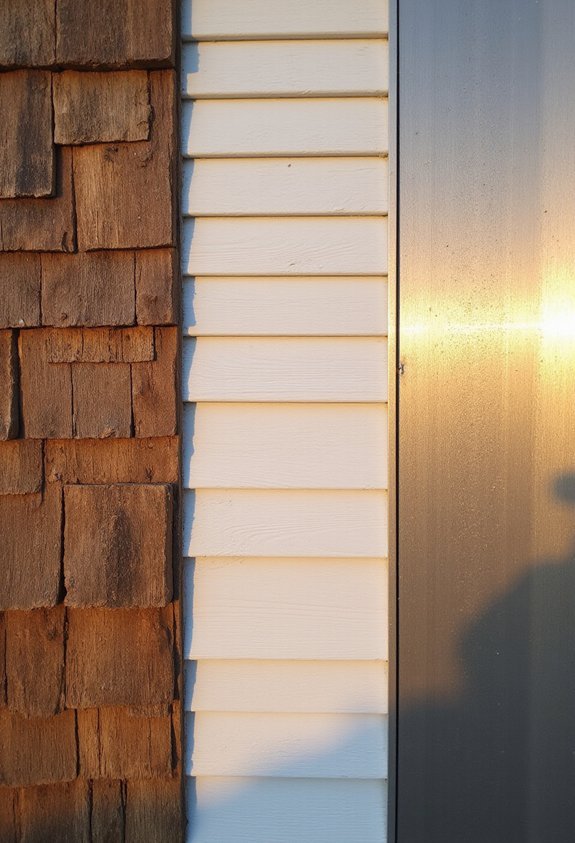
While the upfront installation costs we’ve discussed give you an immediate picture of your expenses, they don’t tell the whole story about which siding material will actually cost you the least over three decades of ownership. Metal siding typically requires minimal maintenance, saving you thousands in repairs and repainting, whereas wood demands regular upkeep and eventually needs replacement. Vinyl falls between these options, offering moderate maintenance needs at reasonable costs. When you factor in energy efficiency, metal’s reflective properties reduce cooling expenses considerably compared to wood and vinyl. Insurance premiums may also favor metal due to its fire resistance. Over thirty years, metal siding often proves most economical despite higher initial installation fees, while wood becomes markedly costlier with ongoing maintenance demands.
How Long Does Metal Siding Last?
Understanding the long-term value of metal siding requires looking beyond just the thirty-year cost comparison and examining how long the material actually lasts before you’ll need to replace it. Metal siding typically lasts between forty and sixty years, depending on the type you choose and how well you maintain it. Steel siding generally lasts around forty to fifty years, while aluminum siding can reach fifty to sixty years with proper care. Factors affecting longevity include your climate, installation quality, and regular maintenance like cleaning and inspections. Coastal areas with salt spray may reduce lifespan, while dry climates tend to preserve metal siding longer. By understanding these timelines, you can better assess whether metal siding truly represents a worthwhile investment for your home’s future.
How Well Does Metal Siding Handle Storms and Damage?
When severe weather strikes your home, metal siding‘s ability to withstand storms and physical damage becomes an essential factor in protecting your investment. Metal siding demonstrates excellent resistance to high winds, hail, and heavy rain because of its rigid, interlocking panel design that creates a protective barrier. Unlike traditional materials, metal won’t rot, warp, or crack under extreme weather conditions. The panels’ durability means you’ll experience minimal storm-related damage, reducing costly repairs. However, metal siding can dent from severe hail or flying debris, though these dents typically don’t compromise the structural integrity or weather protection. You’ll appreciate the peace of mind knowing your siding maintains its protective function even after significant weather events, making it a dependable choice for long-term home security.
What Maintenance Does Metal Siding Actually Need?
Metal siding’s durability during storms doesn’t mean you can ignore it entirely, because regular maintenance keeps your panels functioning at their best and extends their lifespan considerably. You’ll need to inspect your siding annually for dents, scratches, or rust spots, particularly after severe weather events. Cleaning your panels twice yearly with mild soap and water prevents dirt accumulation and potential corrosion. Check seams and fasteners regularly to verify they’re tight and secure, as loose components can allow water infiltration. If you notice rust developing, address it immediately using appropriate metal sealers or coatings. You should also trim nearby tree branches to prevent physical damage and safeguard proper drainage around your home’s foundation. These straightforward maintenance tasks typically cost minimal money but robustly protect your investment.
Energy Efficiency and Utility Savings Over Time
Because metal siding reflects sunlight rather than absorbing it, you’ll notice a measurable reduction in your home’s cooling costs during warmer months, and this reflective property works alongside proper insulation to create a thermal barrier that keeps your indoor temperature more stable throughout the year. You can expect to see energy savings ranging from 10 to 25 percent on your annual cooling bills, depending on your climate zone and installation quality. Over a 20-year period, these accumulated savings can total thousands of dollars, effectively offsetting your initial investment. Additionally, metal siding’s durability means you’re not replacing damaged insulation from weather wear, which further preserves your home’s energy performance and maintains consistent utility cost reductions throughout the lifespan of your siding system.
Will Metal Siding Increase Your Home’s Resale Value?
One of the most compelling reasons homeowners choose metal siding is its potential to boost your property’s market value when you decide to sell. Metal siding appeals to buyers because it requires minimal maintenance, resists weather damage, and lasts considerably longer than traditional materials like wood or vinyl. Since buyers appreciate these long-term durability benefits, they’re often willing to pay a premium for homes with metal siding already installed. You’ll likely recover a substantial portion of your initial investment through increased resale value, though the exact return depends on your local real estate market conditions and the quality of your installation. This combination of reduced future maintenance costs and higher property value makes metal siding a financially smart choice for long-term homeowners.
Installation Add-Ons and Repair Costs You Weren’t Expecting
While the long-term value and durability of metal siding make it an attractive investment, you’ll want to understand the additional costs that often appear once installation begins and throughout the lifespan of your system. Installation add-ons, such as underlayment, flashing, and trim work, can increase your initial expenses by fifteen to thirty percent. You may also encounter unexpected repair costs, including dent removal, rust treatment, or fastener replacement, which aren’t always covered by warranties. Severe weather events can damage panels, requiring costly repairs that your homeowner’s insurance might not fully cover. Additionally, you’ll need specialized labor for these repairs, which commands premium pricing since fewer contractors possess metal siding expertise compared to traditional siding professionals.
When Does Metal Siding Pay for Itself?
Although metal siding requires a substantial upfront investment, you’ll likely recoup your costs through energy savings, reduced maintenance expenses, and increased home value over time. Most homeowners break even within 15 to 20 years, depending on your local climate and energy costs. In colder regions, you’ll see faster payback periods because metal siding’s reflective properties noticeably reduce heating and cooling expenses. You won’t need frequent repainting or repairs, which saves thousands over decades. When you eventually sell your home, metal siding attracts buyers and can increase your property’s resale value by 5 to 10 percent. Calculate your specific payback timeline by comparing your current siding maintenance costs against projected energy savings and reduced repair expenses.
Conclusion
You’ll find that metal siding panels require a significant upfront investment, yet they’ll likely pay for themselves within 15 to 20 years through energy savings and minimal maintenance costs. Consider that metal siding can last 40 to 70 years, meaning you’re potentially getting two full lifespans of protection compared to vinyl’s 20 to 40 years. When you factor in increased resale value and reduced repair expenses, you’re making a financially sound long-term decision for your home’s future.