
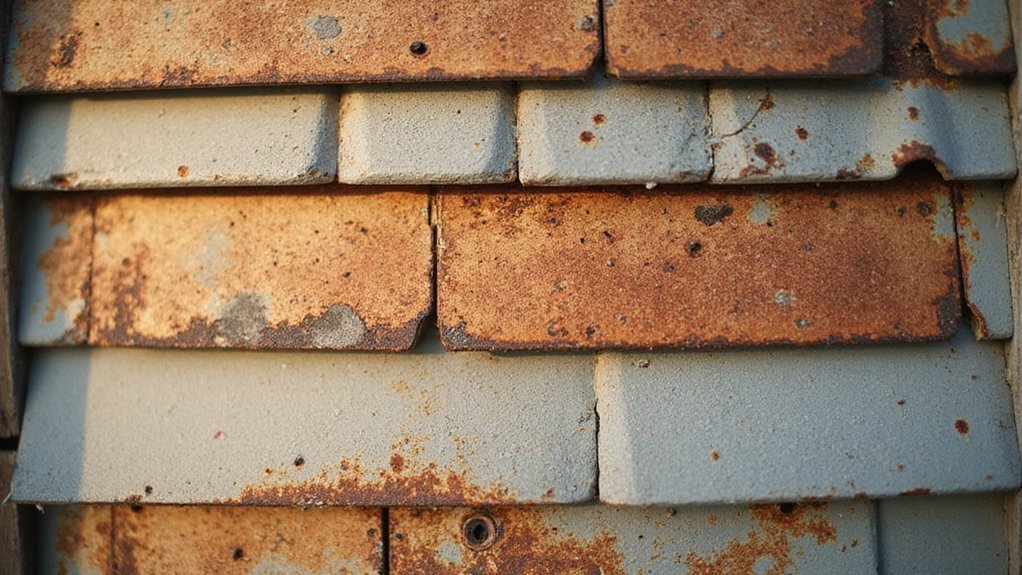
When you’re considering metal siding for your home, you’ll want to understand how long it’ll actually protect your investment. Different metals perform differently—steel panels last 40–60 years, while copper and zinc can exceed 100 years, yet aluminum falls short at 20–40 years. Your climate, installation quality, and maintenance habits will determine whether your panels reach these timelines or fall short. Discover what separates panels that fail early from those that outlast decades.
Steel Siding: 40–60 Years of Weather Protection
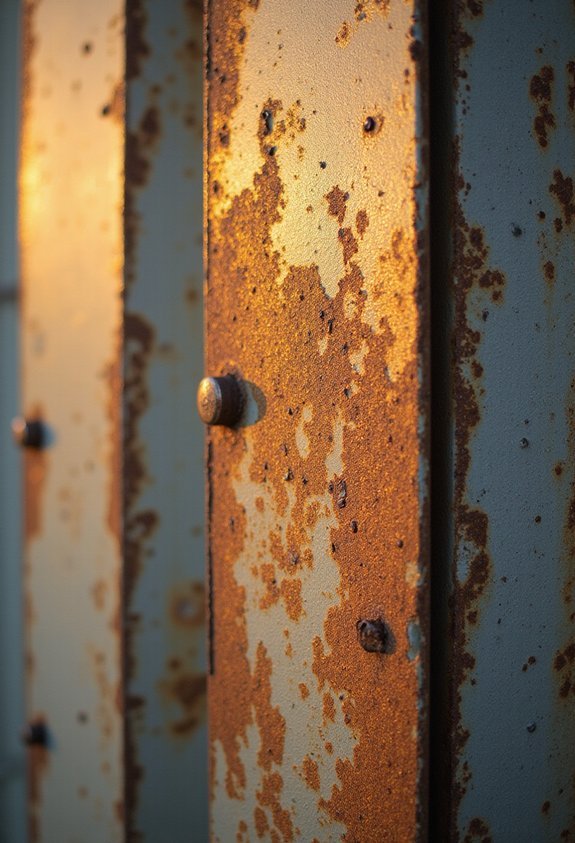
Durability—that’s the hallmark of steel siding, which can protect your home’s exterior for four to six decades when you install it properly and maintain it regularly. Steel withstands harsh weather conditions, including heavy rain, strong winds, and temperature fluctuations, because of its inherent strength and resilience. You’ll find that steel panels resist denting better than aluminum alternatives, though they can develop rust if the protective coating deteriorates. To maximize your siding’s lifespan, you should inspect it annually for damage, clean it regularly to prevent corrosion buildup, and address any scratches or chips promptly by applying touch-up paint. With consistent care and professional installation, steel siding delivers reliable protection that justifies its initial investment over decades of service.
Aluminum Panels: Why They Last Shorter Than Steel
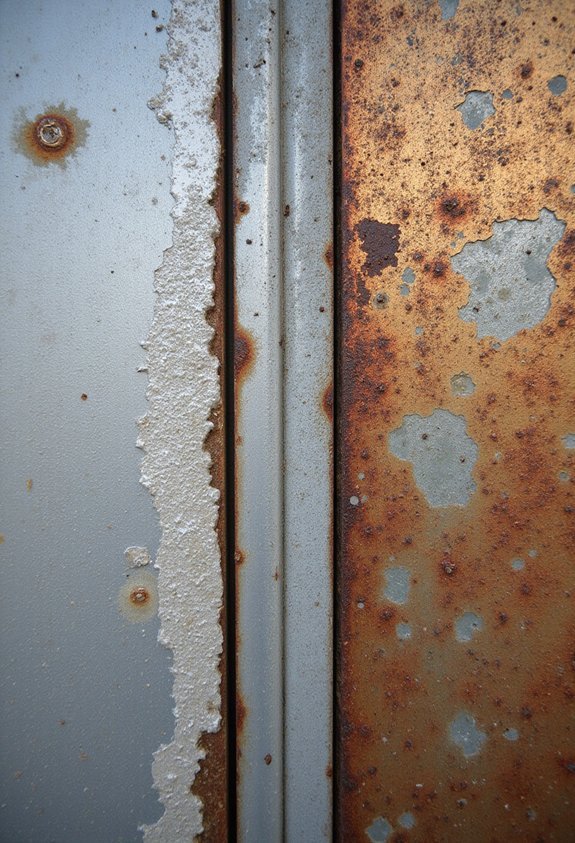
Why does aluminum siding typically last only 20 to 40 years—considerably shorter than steel’s 40 to 60 year lifespan? Aluminum’s vulnerability stems from its inherent material properties and environmental interactions. Unlike steel, aluminum corrodes more readily when exposed to moisture and salt air, particularly in coastal regions where saltwater accelerates degradation. Additionally, aluminum expands and contracts more extensively with temperature fluctuations, creating stress on fasteners and joints that can eventually fail. The material also softens at higher temperatures, making it susceptible to denting and warping from impact or extreme weather. While aluminum offers advantages like lighter weight and lower initial cost, these chemical and physical limitations mean you’ll likely need replacement sooner than with steel alternatives, making long-term durability considerations essential for your investment decision.
Copper and Zinc Metal Siding: The Longest-Lasting Option
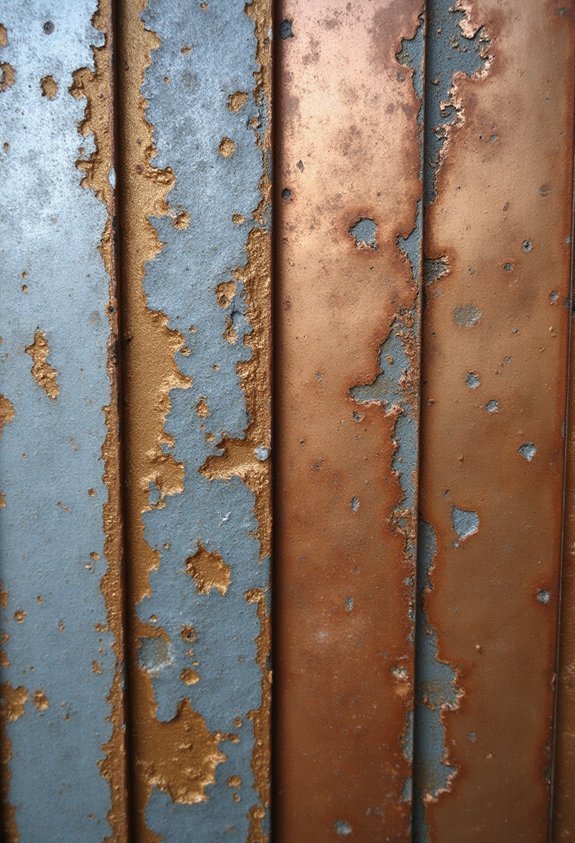
If you’re looking for metal siding that’ll truly stand the test of time, copper and zinc options represent the pinnacle of longevity in the metal siding market, often lasting 50 to 100+ years or even longer with proper maintenance. Copper naturally develops a protective patina, which is a greenish layer that shields the underlying metal from corrosion and weather damage. Zinc performs similarly, creating its own protective coating called zinc patina over time. You’ll find that both materials resist rust exceptionally well, making them ideal for coastal areas and humid climates where moisture poses significant challenges. While these premium options require a larger initial investment compared to aluminum or basic steel, their extended lifespan and minimal maintenance needs make them cost-effective long-term choices for your home’s exterior protection.
Metal vs. Vinyl, Wood, and Fiber Cement: A Longevity Comparison
When you’re comparing different siding materials for your home’s exterior, you’ll quickly discover that metal siding outperforms most traditional alternatives with regards to lifespan and durability. Vinyl siding typically lasts 20 to 40 years before it becomes brittle and requires replacement, while wood siding demands constant maintenance and generally lasts only 20 to 40 years without regular care. Fiber cement offers better longevity, lasting 25 to 50 years, but it’s susceptible to cracking and moisture damage. Metal siding, however, consistently delivers 40 to 70 years of reliable protection, with premium options like copper and zinc extending beyond 100 years. You’ll find that metal’s superior resistance to weather, pests, and rot makes it the most economical long-term choice for your home’s exterior protection.
How Climate Affects Your Metal Siding Lifespan
Your local climate plays a crucial role in determining exactly how long your metal siding will protect your home, as different weather conditions create distinct challenges that either accelerate or slow down the material’s degradation. In humid regions, moisture promotes rust and corrosion on uncoated metal surfaces, dramatically reducing longevity. Coastal areas expose siding to salt spray, which aggressively corrodes metal panels and demands premium coating systems for protection. Extreme temperature fluctuations cause metal to expand and contract repeatedly, stressing fasteners and seals over time. Regions with heavy snow or ice load your siding with additional weight and moisture infiltration risks. Conversely, dry climates with minimal precipitation extend your metal siding’s lifespan considerably, since reduced moisture exposure prevents rust formation and maintains structural integrity longer than other environmental conditions.
Installation Quality: The Lifespan Killer You Can Control
While climate factors lie largely outside your control, the quality of your metal siding installation is something you can directly influence to protect your investment and maximize longevity. Poor installation creates gaps where moisture seeps behind panels, causing rust and structural damage that vastly shortens lifespan. You’ll want to hire experienced contractors who understand proper fastening techniques, ensuring panels expand and contract without buckling. They should install appropriate underlayment and flashing around windows, doors, and roof lines to redirect water away from vulnerable areas. Inadequate ventilation behind panels traps moisture, accelerating deterioration. When contractors rush through installation or cut corners on materials, you’re essentially paying for early replacement. Investing in skilled installation now prevents costly repairs and extends your metal siding’s functional years considerably.
What You Actually Need to Do to Keep Metal Siding Lasting
Getting quality installation right is just the beginning of your metal siding’s journey, because what you do after the panels go up matters just as much for long-term durability. You’ll need to inspect your siding twice yearly, looking for loose panels, gaps, or areas where water might seep behind the material. Clean your siding annually with a soft brush and mild detergent to remove dirt and debris that can trap moisture. Check your caulking and sealant around windows, doors, and trim yearly, reapplying when you notice cracks or deterioration. Trim tree branches that hang over your roof to prevent debris accumulation and potential damage from falling limbs. Address rust spots immediately with appropriate metal-safe treatments to prevent corrosion from spreading.
What Rust, Corrosion, and Fading Look Like (And When to Worry)
Even though metal siding’s durability is one of its strongest selling points, the material isn’t immune to rust, corrosion, and fading—three separate conditions that’ll develop differently depending on your climate, maintenance habits, and the quality of your panels’ protective coating. Rust appears as orange or reddish spots where the metal’s protective layer has worn away, while corrosion shows up as white chalky deposits or pitting on the surface. Fading occurs gradually as UV rays break down the paint finish, making your siding look dull and aged. You should worry when rust spreads beyond small surface spots or when corrosion creates holes that allow water penetration. Minor fading is cosmetic, but addressing rust and corrosion early prevents structural damage that’ll cost considerably more to repair.
Repair or Replace: A Decision Framework by Damage Type and Cost
Once you’ve identified rust, corrosion, or fading on your metal siding, you’ll need to determine whether fixing the problem through repair makes financial sense or if replacing the affected panels is the better choice. Generally, if damage covers less than 30 percent of a panel’s surface, repair becomes the economical option, especially for minor rust spots or small dents. However, when damage exceeds this threshold or affects multiple panels, replacement typically proves more cost-effective long-term. Consider the panel’s age and remaining lifespan; repairing panels nearing the end of their life rarely justifies the expense. Additionally, evaluate repair accessibility and labor costs, which can substantially impact your decision. Compare quotes from contractors to guarantee you’re making an informed, budget-conscious choice based on actual replacement versus repair expenses.
The Real Annual Cost of Metal Siding Over Time
Understanding your actual yearly expenses for metal siding requires you to look beyond the initial purchase price and consider the full financial picture across the panel’s lifespan. You’ll need to calculate the total investment by dividing your installation costs, maintenance expenses, and potential repairs by the number of years your panels last. For example, if you spend $15,000 installing metal siding that lasts 40 years, you’re paying approximately $375 annually just for the initial investment. Add routine maintenance costs, which typically run $200 to $400 yearly, and you’re looking at roughly $575 to $775 per year. This extensive approach helps you understand whether metal siding delivers genuine value compared to alternative materials, allowing you to make informed financial decisions based on realistic long-term costs.
Conclusion
You’ve learned that your metal siding’s lifespan hinges on three critical factors: the material type you choose, the climate conditions where you live, and the maintenance you’re willing to commit to regularly. Steel lasts 40–60 years, while copper stretches beyond 100, but here’s what matters most—your actions today determine whether you’ll get decades of protection or face costly repairs sooner than expected.