
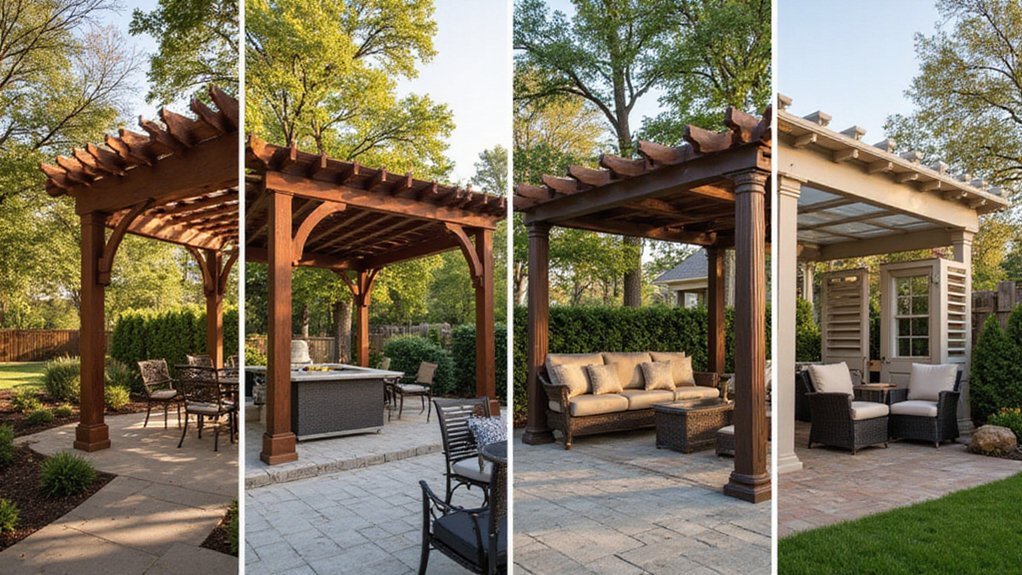
If you’ve walked past a neighbor’s pergola and wondered why theirs looks so different from what you imagined, you’re not alone. Choosing the right pergola roof involves understanding how different materials and designs work in your specific climate, fit your budget, and match your daily lifestyle needs. Each option—from open lattice to retractable covers—offers distinct advantages and trade-offs that will determine your long-term satisfaction.
Open Lattice Pergolas: Classic Shade With Dappled Light
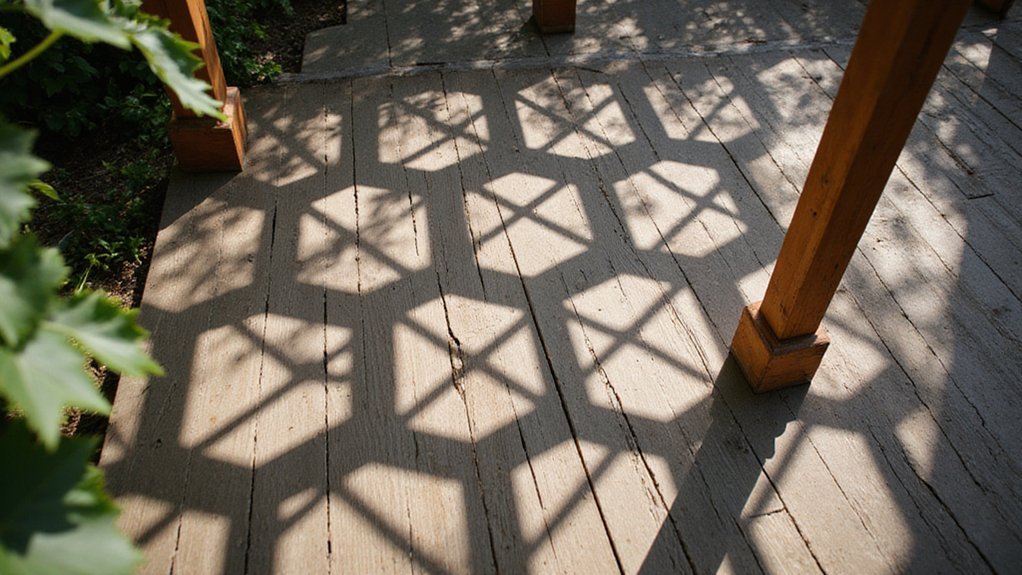
Because you’re looking for a pergola roof that offers both shade and natural light, an open lattice design might be exactly what you need. This classic option features a framework of wooden or vinyl strips arranged in a crisscross pattern, which creates dappled shadows while allowing sunlight to filter through. You’ll benefit from protection against harsh UV rays without sacrificing the brightness you’d get from full sun exposure. The lattice structure also permits air circulation, keeping your outdoor space cooler during warm months. Installation is straightforward, requiring basic carpentry skills or professional assistance. Open lattice pergolas work particularly well in regions with moderate climates, as they don’t provide complete weather protection. You can enhance this design by adding climbing vines, which’ll increase shade coverage while maintaining the aesthetic appeal.
Solid Roof Pergolas: Complete Weather Protection
If you’re seeking complete protection from rain, snow, and intense sun, a solid roof pergola’ll deliver the extensive weather coverage that open lattice designs can’t provide. You’ll gain a fully enclosed overhead surface, typically made from polycarbonate, metal panels, or wood, which blocks precipitation and harmful UV rays entirely. This option works exceptionally well if you’re in regions experiencing heavy rainfall or extreme temperature fluctuations. You can use your pergola space during virtually any weather condition, expanding your outdoor living season year-round. However, solid roofs require proper drainage systems and ventilation to prevent water pooling and moisture accumulation. Installation costs are higher than lattice options, and maintenance demands attention to guarantee longevity. Despite these considerations, solid roof pergolas offer unmatched functionality for those prioritizing complete environmental protection.
Adjustable Louver Pergolas: Control Light and Airflow On Demand
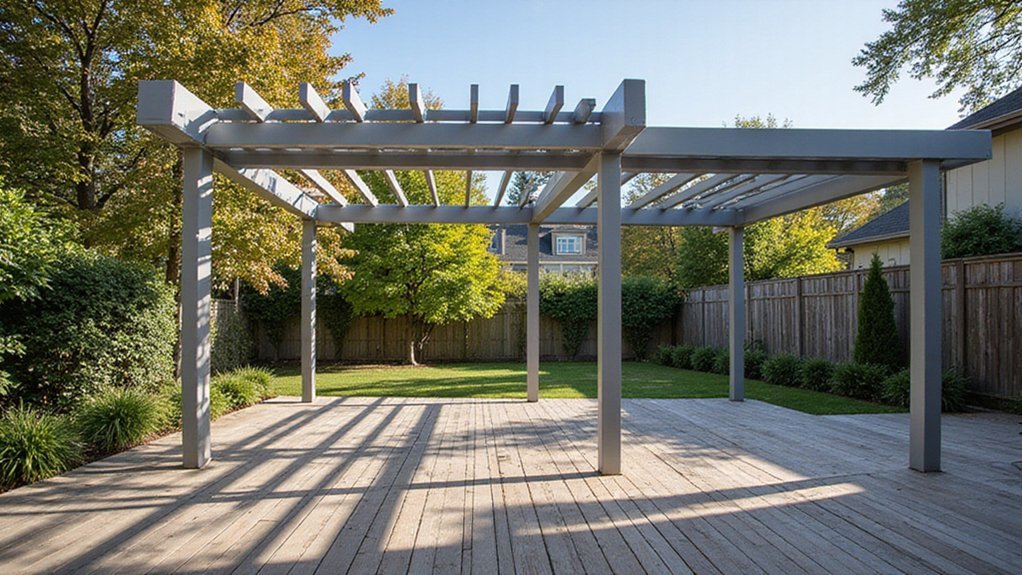
While solid roof pergolas provide maximum protection through permanent overhead coverage, adjustable louver pergolas offer you a flexible middle ground that lets you customize your shade and ventilation based on your immediate needs and weather conditions. You can open the horizontal slats completely to enjoy full sunlight and airflow during pleasant weather, or close them to block intense heat and UV rays when temperatures rise. This adjustability means you’re not locked into a single configuration, so you can modify your pergola’s performance throughout the day or season. Most adjustable louver systems operate through manual cranks or motorized controls, giving you convenient access to your preferred settings without climbing or heavy lifting.
Retractable Pergola Covers: Flexibility for Changing Weather
What happens when the weather suddenly changes while you’re enjoying your outdoor space? Retractable pergola covers give you the answer by offering flexible protection that you can deploy whenever you need it. These motorized or manual systems feature fabric panels that roll or slide across your pergola’s frame, allowing you to instantly shield yourself from rain, intense sun, or unexpected wind. You’ll appreciate the control they provide, as you can adjust coverage partially or completely depending on conditions. Installation requires professional help to guarantee proper motor integration and weatherproofing, though manual options are simpler. The investment costs more upfront than fixed solutions, but the adaptability makes them ideal if you experience variable weather patterns and want maximum comfort throughout changing seasons.
Polycarbonate Panel Pergolas: Durability Meets Light Diffusion
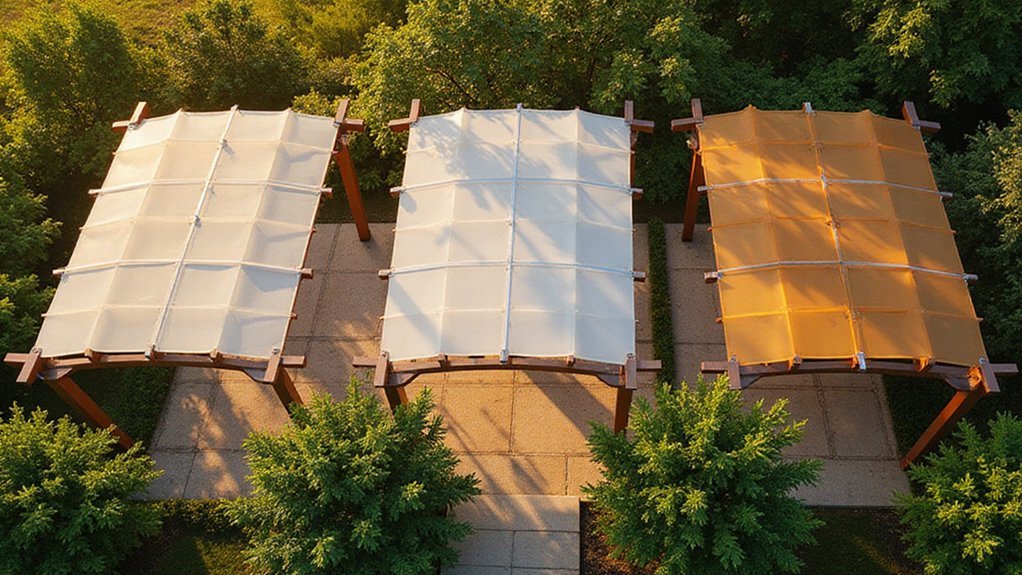
Because you’re looking for a pergola roof that combines strength with smart light management, polycarbonate panels offer an excellent solution that outperforms traditional materials in several key ways. These panels resist impact and UV rays far better than glass, making them ideal for areas with harsh weather conditions. You’ll appreciate how they diffuse sunlight evenly throughout your space, reducing glare while maintaining natural brightness for your outdoor activities. Polycarbonate won’t yellow or degrade quickly, and it’s considerably lighter than glass, which simplifies installation and reduces structural demands on your pergola frame. The material also provides excellent insulation properties, helping regulate temperature beneath your pergola. When you choose polycarbonate panels, you’re investing in durability that typically lasts 10-15 years with minimal maintenance requirements beyond occasional cleaning.
Shade Cloth Pergolas: Affordable Coverage Without Permanent Installation
If you’re seeking a pergola roof option that doesn’t require the long-term commitment or expense of polycarbonate panels, shade cloth offers a practical alternative that you can install and remove based on your seasonal needs. You’ll appreciate shade cloth’s flexibility and affordability, as it costs considerably less than permanent roofing materials. The fabric blocks ultraviolet rays effectively, reducing heat and creating comfortable outdoor spaces during hot months. You can easily adjust the cloth’s density depending on your desired light levels, ranging from 30% to 90% shade coverage. Installation involves securing the cloth to your pergola’s framework using clips or fasteners, which you can accomplish without professional help. When winter arrives or you need the space open, you simply remove the cloth for storage until next season.
Price Breakdown: Installation and Material Costs by Roof Type
The cost of your pergola roof depends considerably on which material you choose, and understanding the price ranges for each option helps you make an informed decision that fits your budget. Polycarbonate panels typically range from $2,000 to $5,000 for materials and installation, offering excellent durability and weather protection. Metal roofing costs between $3,500 and $7,000, providing superior longevity and strength. Shade cloth remains the most affordable option at $500 to $1,500, though it requires periodic replacement. Retractable systems demand higher investment, ranging from $4,000 to $8,000, but offer flexible coverage control. Installation expenses vary based on your pergola’s size, your location, and structural complexity. Obtaining multiple quotes from local contractors guarantees you’re comparing accurate pricing and understanding what’s included in each estimate.
Durability Comparison: Which Materials Actually Last Longest
While you’re weighing your pergola roof options, understanding how long each material will truly last helps you determine whether the initial cost represents good value for your investment. Polycarbonate panels typically last 10-15 years before yellowing and becoming brittle from UV exposure. Metal roofing, particularly aluminum or steel, can last 20-30 years with proper maintenance and rust prevention. Wood shingles require regular treatment and usually last 15-20 years before rot and insect damage compromise their integrity. Fabric retractable roofs generally last 5-10 years depending on climate conditions and usage frequency. Vinyl options fall in the middle range at 10-20 years. Your local weather patterns, including intense sun, heavy rain, and temperature fluctuations, substantially affect actual lifespan, so consider your specific climate when evaluating durability.
Maintenance Demands: Time and Cost for Each Roof Type
Because durability and longevity depend heavily on ongoing care, you’ll want to understand what maintenance each pergola roof type demands before making your final decision. Wood requires annual staining or sealing, plus regular inspections for rot and insect damage, costing $300–$800 yearly. Metal roofs need occasional rust treatment and gutter cleaning, typically running $150–$400 annually. Polycarbonate panels demand gentle cleaning and UV protectant reapplication every two to three years, averaging $200–$500. Fabric retractable systems require professional cleaning and mechanical checks, costing $250–$600 per year. Vinyl materials need simple washing and occasional replacement of worn sections, usually $100–$300 annually. Consider your willingness to invest time and money into maintenance when selecting your pergola roof type, since neglected systems deteriorate rapidly regardless of initial quality.
Finding Your Perfect Match: Climate, Budget, and Lifestyle Guide
After you’ve weighed the maintenance demands of each roof type, you’re ready to narrow down your options by considering three interconnected factors that’ll directly impact your satisfaction: your local climate, your available budget, and your daily lifestyle needs.
Your climate determines which materials’ll withstand your weather patterns, whether you’re dealing with heavy snow, intense sun, or frequent rain. Your budget dictates which options remain financially feasible, including both installation and long-term upkeep costs. Your lifestyle reflects how much time you can dedicate to maintenance tasks and how you’ll actually use your pergola space.
Conclusion
You’ll find your ideal pergola roof by weighing what matters most: your climate’s demands, your budget’s limits, and how you’ll actually use your outdoor space. Like a puzzle where every piece must fit perfectly, you’re matching materials—wood, vinyl, polycarbonate, or louvers—to your specific needs. Consider maintenance costs alongside initial investment, then choose the roof that transforms your backyard into the outdoor living space you’ve envisioned.