
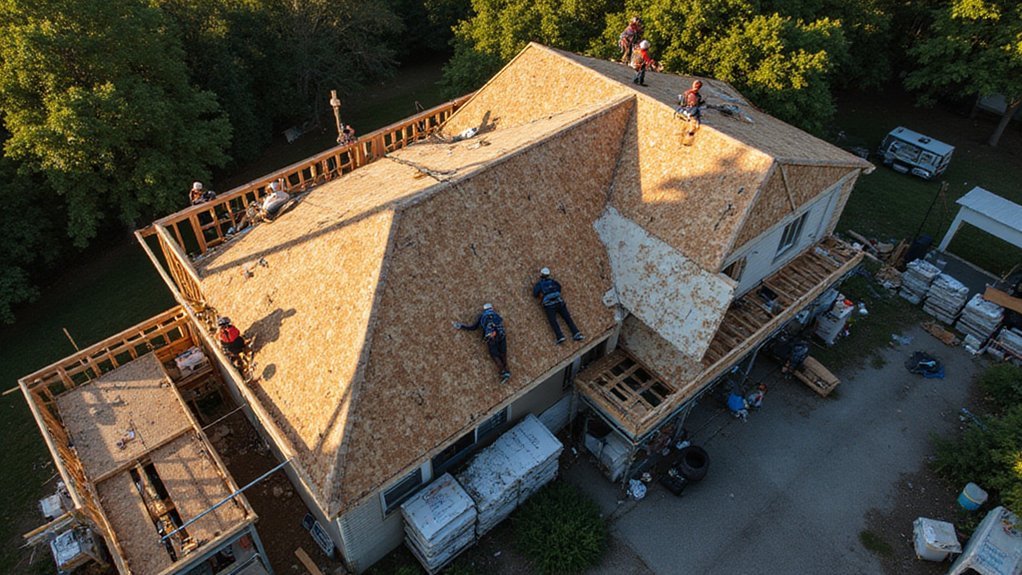
When you’re planning a roof replacement, you need to understand that your project’s timeline depends on multiple factors working together. Your roof’s size, the complexity of its design, your local weather patterns, and your contractor’s experience all influence how long the work will take. While some homeowners complete their projects in just a couple of days, others face unexpected delays that stretch the timeline considerably—and knowing which factors cause these delays can help you prepare.
How Long Does Roof Replacement Actually Take?
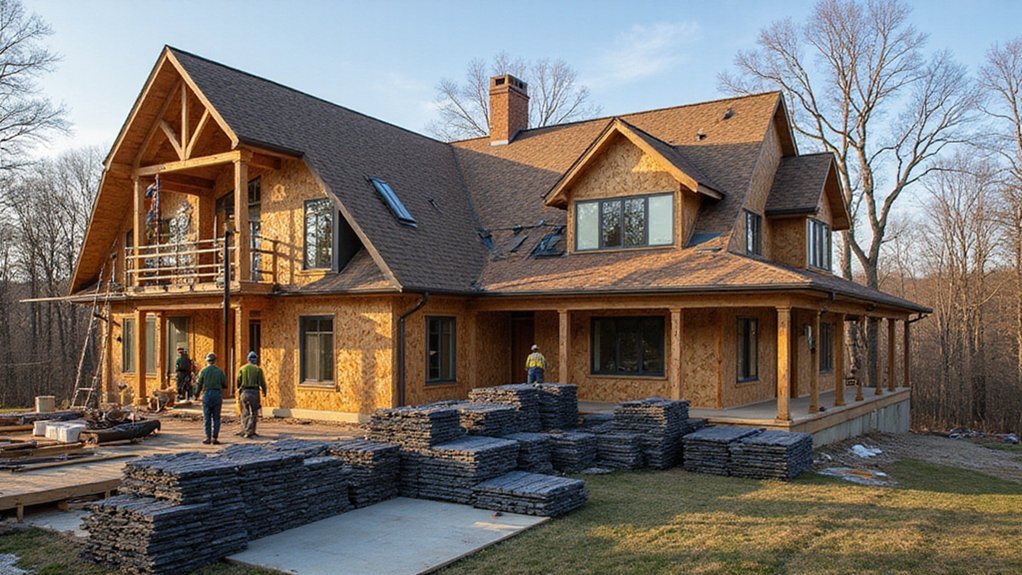
The timeline for a roof replacement typically breaks down into several distinct phases, with most residential projects taking anywhere from a few days to a couple of weeks, depending on factors like the size of your roof, the complexity of the job, weather conditions, and the contractor’s crew size. You’ll first experience the inspection and preparation phase, where your contractor assesses the existing roof and removes old materials. Next comes the installation of new roofing materials, which represents the longest portion of the project. Finally, you’ll see cleanup and final inspection, ensuring everything meets quality standards. Throughout this process, you should expect some noise and disruption to your daily routine, though professional crews work efficiently to minimize delays and keep your home protected during the changeover.
What Project Size Means for Your Timeline
Because your roof’s size directly impacts how long workers’ll need to complete the replacement, understanding this relationship helps you plan your schedule and budget accordingly. A small residential roof, typically under 1,500 square feet, usually takes one to two days to finish. Medium-sized roofs between 1,500 and 3,000 square feet generally require two to three days of work. Larger roofs exceeding 3,000 square feet may take four to five days or longer, depending on complexity and weather conditions. Your roof’s pitch, or steepness, also affects the timeline, since steeper roofs demand more time and safety precautions. Additionally, the number of workers assigned to your project influences completion speed, as larger crews can cover more ground efficiently while maintaining quality standards.
How Does Roof Complexity Affect Installation Duration?
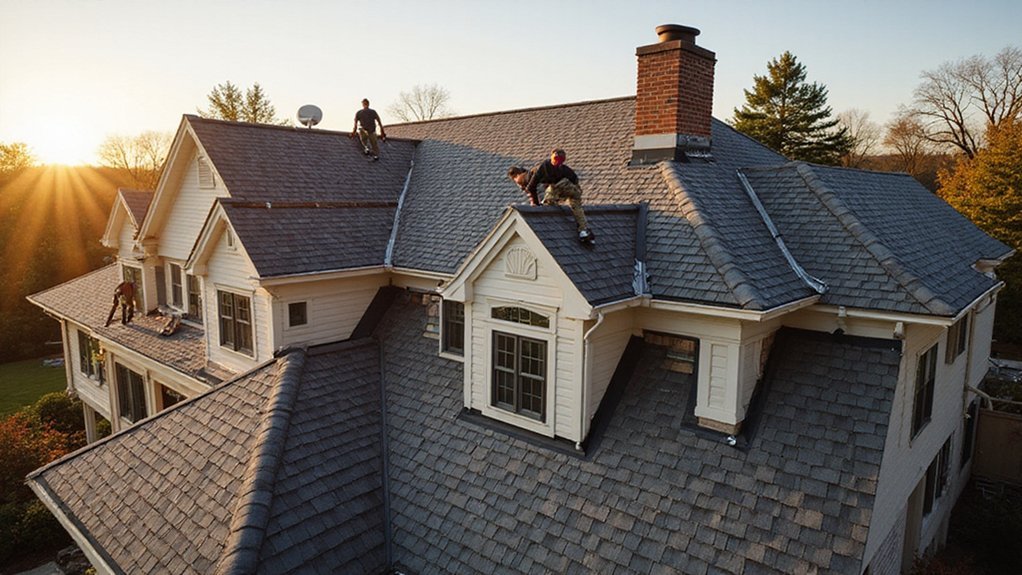
While roof size gives you a general timeline estimate, the complexity of your roof’s design plays an equally significant role in determining how long the replacement’ll actually take. Roofs with multiple peaks, valleys, and angles require more time because workers must carefully remove and reinstall shingles in these intricate areas. Steep-pitched roofs demand additional safety precautions and slower work speeds, extending your project timeline considerably. Chimneys, skylights, and vents add complexity because roofers must work around these obstacles and guarantee proper sealing to prevent leaks. Simple, flat roofs with minimal features typically finish faster than their complex counterparts. Understanding your roof’s specific design helps you anticipate realistic completion dates and plan accordingly for your home’s protection during the replacement process.
Why Weather Can Derail Your Schedule
Even when you’ve planned every detail of your roof replacement project down to the exact square footage and complexity level, unpredictable weather conditions can drastically extend your timeline beyond initial estimates. Rain prevents workers from safely accessing your roof and applying materials that require dry conditions, while high winds create dangerous working environments and can damage newly installed shingles. Snow and ice similarly halt progress, and extreme heat can affect how adhesives and sealants cure properly. Contractors must pause work during these weather events, which means your project stretches across additional days or weeks. You’ll want to discuss weather contingencies with your contractor beforehand, as most professionals build buffer time into estimates specifically for these unavoidable delays.
Permits and Inspections: Hidden Timeline Delays
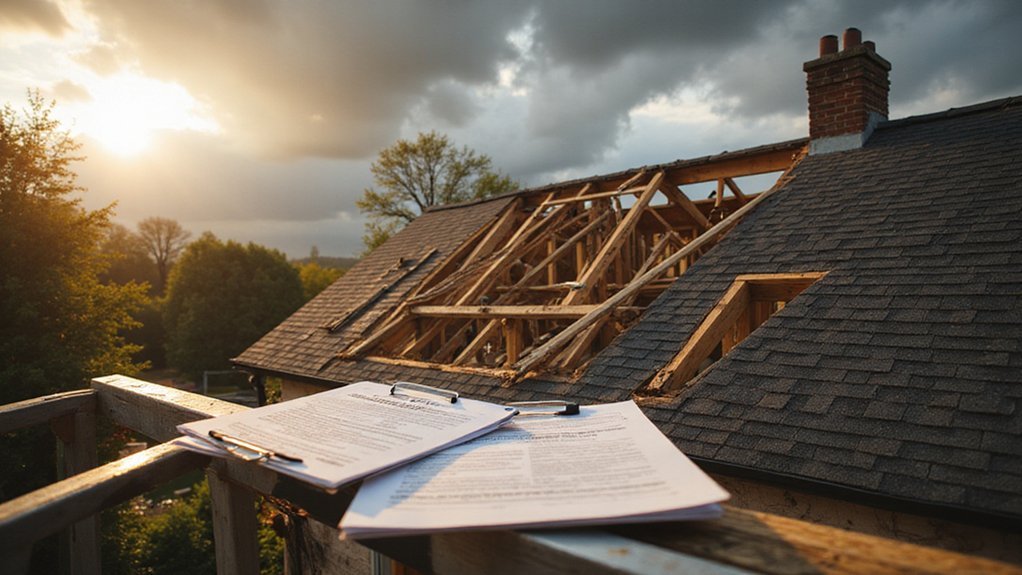
Beyond the weather delays that contractors anticipate, there’s another set of obstacles you’ll face that often catches homeowners off guard: the permit and inspection process required by your local government. Before your contractor can legally begin work, you’ll need to obtain permits from your municipality, which typically takes one to two weeks. Once work starts, inspectors must examine your roof at various stages—after removal, before installation, and upon completion—to guarantee compliance with building codes. Each inspection requires scheduling appointments, and delays in inspector availability can prolong your project considerably. You’re responsible for coordinating these inspections, so staying organized and proactive with your local building department becomes crucial to keeping your replacement timeline on track.
The Tearoff Phase: Where Most Time Gets Spent
Once your permits are approved and inspections have cleared the initial phase, the tearoff stage becomes the most time-consuming component of your entire roof replacement, typically consuming three to five days depending on your home’s size, roof pitch, and structural complexity. During tearoff, workers remove all existing shingles, underlayment, and damaged decking down to bare wood. This process generates substantial debris that requires careful containment and disposal. Your crew’ll need to inspect the underlying structure for rot, mold, or pest damage, which can extend the timeline if repairs become necessary. Weather conditions profoundly impact tearoff duration; rain or high winds force work stoppages. The steepness of your roof also matters considerably, as steeper pitches slow worker productivity and increase safety requirements, ultimately affecting your project’s overall completion date.
Best and Worst Months to Replace Your Roof
Timing your roof replacement strategically can markedly reduce your project’s duration and costs, since weather conditions, contractor availability, and seasonal factors all influence how quickly your new roof gets installed. Spring and fall typically offer ideal conditions because temperatures remain moderate and rainfall is predictable. Summer presents challenges with extreme heat that slows worker productivity, while winter brings freezing temperatures that damage materials and halt progress. You’ll also find that spring and fall contractors aren’t as booked, meaning you’ll secure faster scheduling. Late summer and early fall represent your best window, offering warm but not scorching weather and lower humidity. Conversely, avoid November through February when ice, snow, and freezing rain create dangerous conditions and significant delays.
Do You Have the Right Contractor? Crew Efficiency Matters
While choosing the ideal season for your roof replacement sets the foundation for success, selecting a contractor with a well-organized and experienced crew will ultimately determine how quickly your project reaches completion. A skilled roofing team works systematically, coordinating tasks efficiently to minimize delays and prevent costly mistakes. You’ll want to verify that your contractor employs workers who’ve completed numerous projects, understand safety protocols, and communicate clearly with each other. Ask prospective contractors about their crew’s average project completion times and request references from recent clients. An experienced crew can typically complete a standard residential roof replacement in one to three days, whereas inexperienced workers might take considerably longer. By selecting contractors with proven track records and established teams, you’re investing in both speed and quality workmanship for your roof replacement project.
5 Tactics to Speed Up Your Roof Replacement
Beyond hiring an experienced crew, you can implement several practical strategies that’ll accelerate your roof replacement project from start to finish. First, prepare your property by clearing the work area of obstacles, vehicles, and outdoor furniture, which allows workers to move efficiently without interruptions. Second, guarantee all necessary materials are delivered and organized on-site before work begins, eliminating delays from supply shortages. Third, establish clear communication channels with your contractor regarding daily schedules and expectations, preventing misunderstandings that could slow progress. Fourth, coordinate weather monitoring with your team, scheduling work during most favorable conditions when possible. Finally, consider scheduling the project during off-peak seasons when contractors have greater availability and flexibility, potentially reducing timelines. These coordinated efforts substantially minimize downtime and complications throughout your replacement.
What to Expect: Day-by-Day Installation Breakdown
How does a roof replacement actually unfold once the crew arrives at your property? On day one, workers remove your old roofing materials, including shingles, underlayment, and damaged wood. They’ll inspect the roof deck for structural issues and make necessary repairs before proceeding. Day two involves installing new underlayment, which provides moisture protection beneath your shingles. Workers then begin laying down new shingles in rows, starting from the roof’s lower edges and working upward. Day three typically includes completing shingle installation, installing flashing around chimneys and vents, and adding ridge caps. Final cleanup occurs on day four, where crews remove debris and dispose of old materials. Weather delays can extend this timeline, so unexpected rain or wind may pause work temporarily.
Conclusion
You’ll find that your roof replacement timeline flows like a river—sometimes smooth and swift, sometimes encountering obstacles that slow its progress. By understanding how project size, complexity, weather conditions, permits, and contractor expertise influence your schedule, you’re better equipped to plan accordingly. Selecting an experienced crew, preparing your property thoroughly, and maintaining clear communication with your contractor will help you navigate this process efficiently and keep your project on track.